Donde terminan las montañas
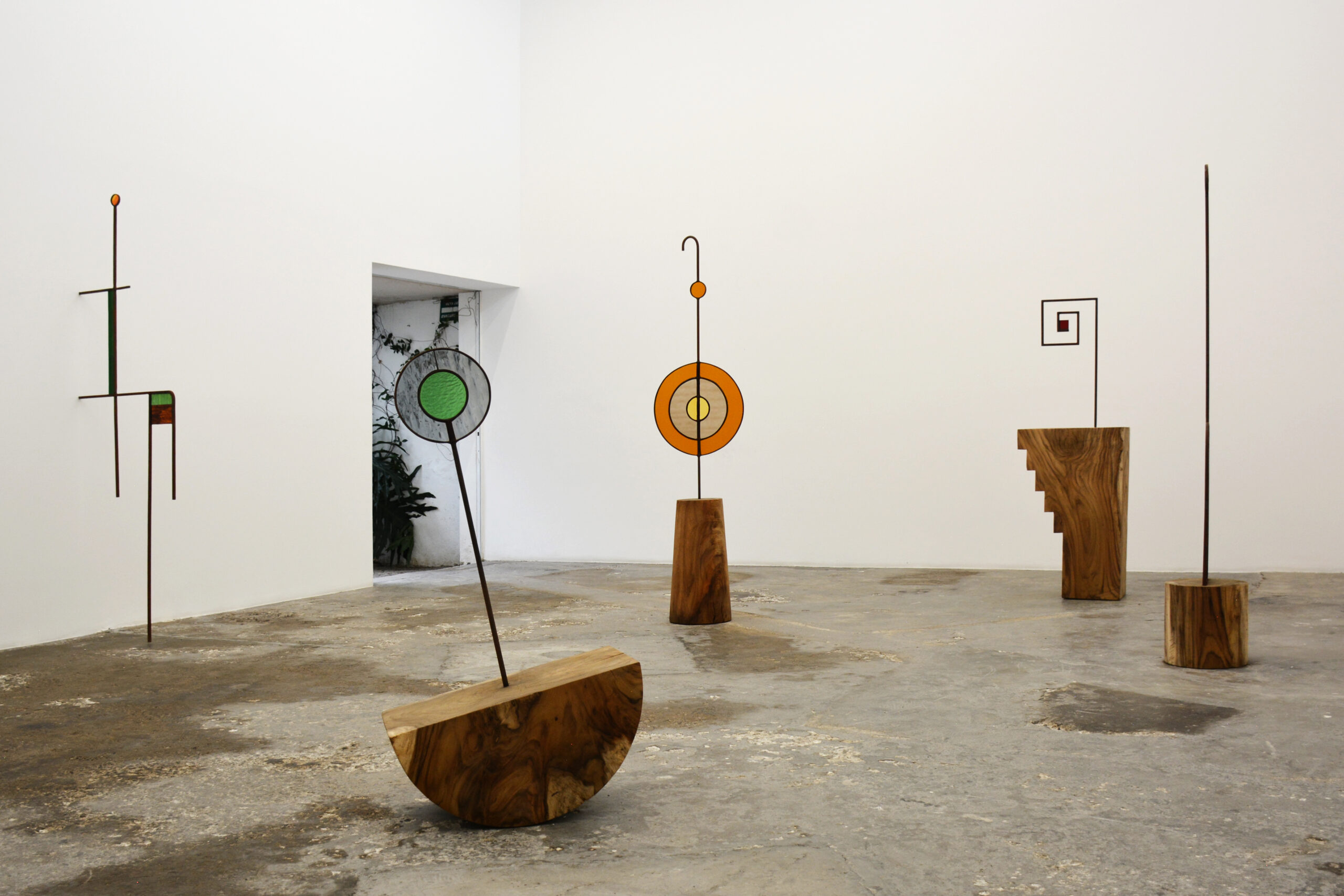
Vista de la exposición Donde terminan las montañas, 2026, Galería Curro. / Exhibition view of the exhibition Where the mountains end, 2026, Galería Curro.
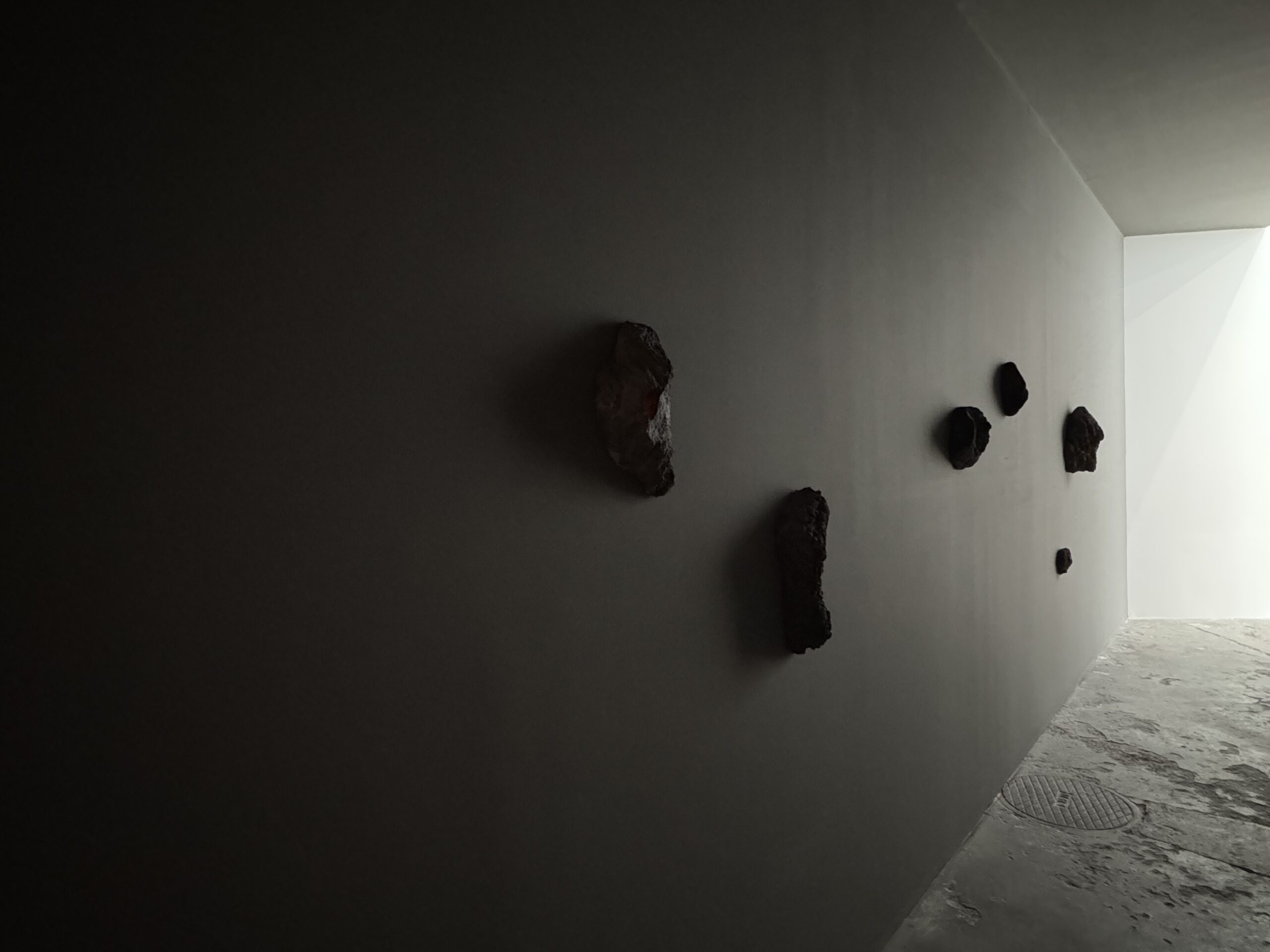
Vista de la exposición Donde terminan las montañas, 2026, Galería Curro. / Exhibition view of the exhibition Where the mountains end, 2026, Galería Curro.
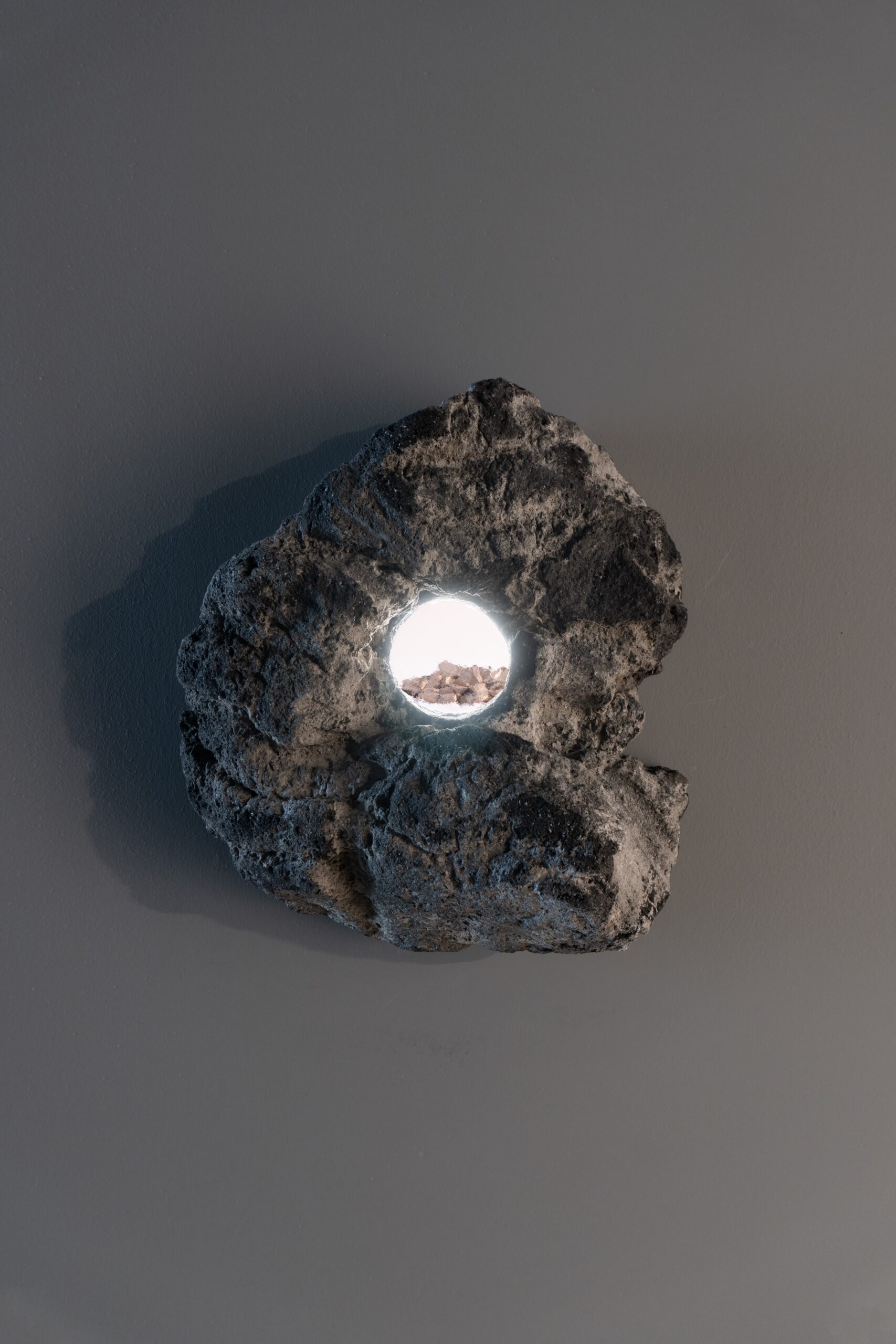
Cartografía de expansión, 2020-26
Piedra volcanica, vidrio claro y bronce / Volcanic rock, clear glass, and bronze
32 x 29 x 13 cm. / 12 5⁄8 x 11 3⁄8 x 5 1⁄8 in.
Pieza única. / Unique piece.
Fotografía cortesía de Galería Curro / Photograph courtesy of Galería Curro.
En la penumbra de la cueva, la semilla deja de ser alimento para convertirse en registro. A través de una mirilla de roca volcánica se encuentra un pequeño cúmulo de granos de maíz, replicados y trasladados a la permanencia del bronce. Esta pieza establece un puente entre la cueva, las primeras manifestaciones rupestres y el inicio de la agricultura; es el vestigio de un ciclo que, aunque detenido, resuena en la memoria.
Al igual que los antiguos registros de mazorcas y calendarios agrícolas grabados en piedra, estas semillas funcionan como una cartografía de lo temporal. Representan la posibilidad de la vida, pero también su imposibilidad: al hacerse eternas mediante el metal, las semillas se vuelven infértiles, suspendidas en un pasado que es, simultáneamente, un futuro post- humano. Encapsuladas en un nicho detrás del muro que evoca las ofrendas halladas en las profundidades de la tierra, estas semillas son inalcanzables. La mirilla actúa como un filtro temporal; lo que vemos no es solo un material precioso, sino el eco poético de un grano que alguna vez fue el centro del cosmos y que hoy, protegido por la piedra, permanece como una suerte de cápsula del tiempo que custodia el secreto de nuestra propia evolución.
__
In the dim light of the cave, the seed ceases to be food and becomes a record. Through a peephole in the volcanic rock lies a small cluster of corn kernels, replicated and preserved in bronze. This piece bridges the cave, the earliest rock art, and the dawn of agriculture; it is the vestige of a cycle that, though halted, resonates in memory.
Like ancient records of corn cobs and agricultural calendars carved in stone, these seeds function as a cartography of the temporal. They represent the possibility of life, but also its impossibility: by becoming eternal through metal, the seeds turn infertile, suspended in a past that is, simultaneously, a post-human future. Encapsulated in a niche behind the wall that evokes the offerings found in the depths of the earth, these seeds are unreachable. The peephole acts as a temporal filter; what we see is not merely precious material, but the poetic echo of a grain that was once the center of the cosmos and that today, protected by stone, remains as a sort of time capsule guarding the secret of our own evolution.
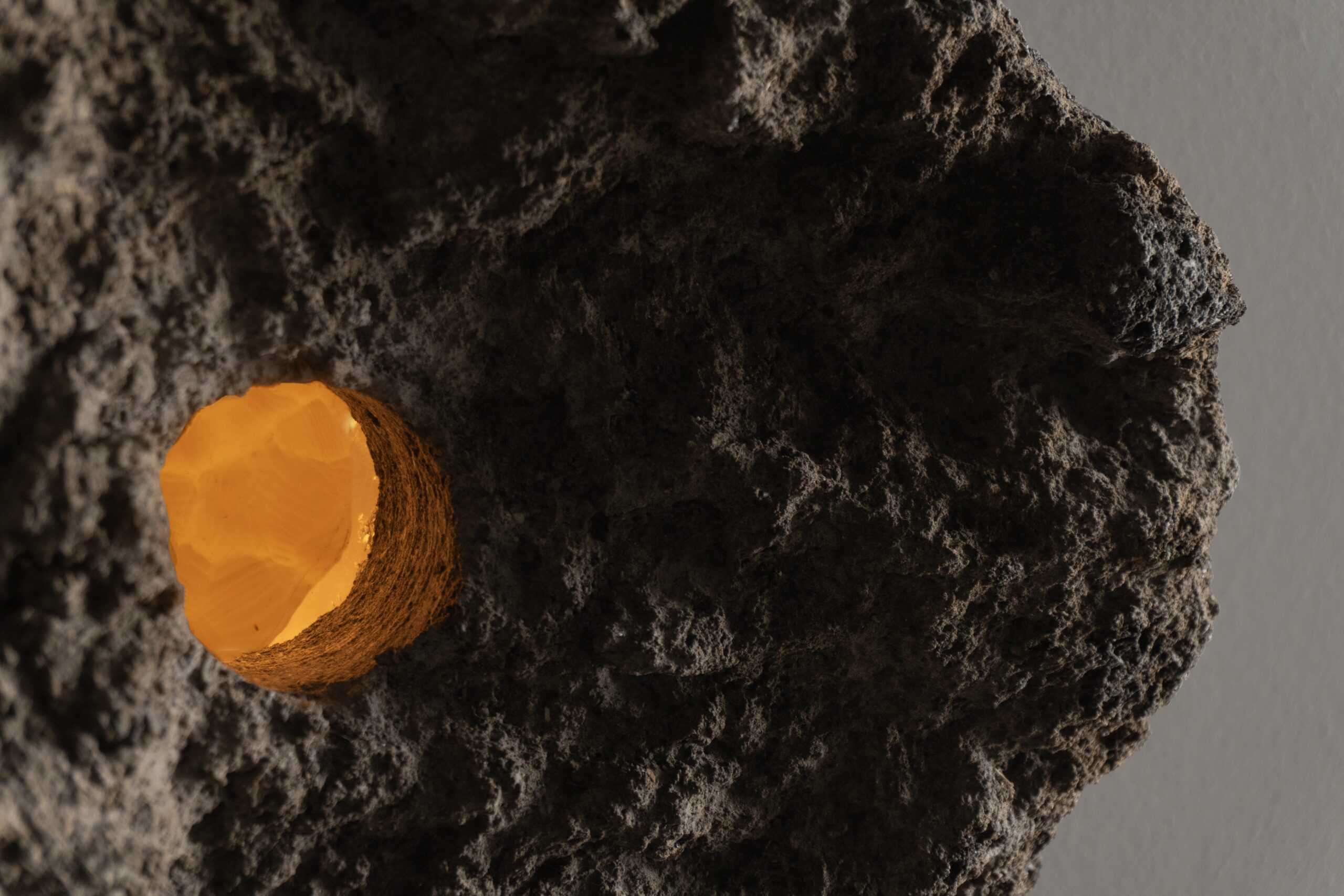
Cartografías III, 2026 (Detalle)
Piedra volcánica, vidrio de color con textura. / Volcanic rock and colored textured glass.
23 x 26 x 8 cm. / 9 1⁄2 x 10 1⁄4 x 3 1⁄8 in.
Pieza única. / Unique piece.
Fotografía cortesía de Galería Curro. / Photograph courtesy of Galería Curro.
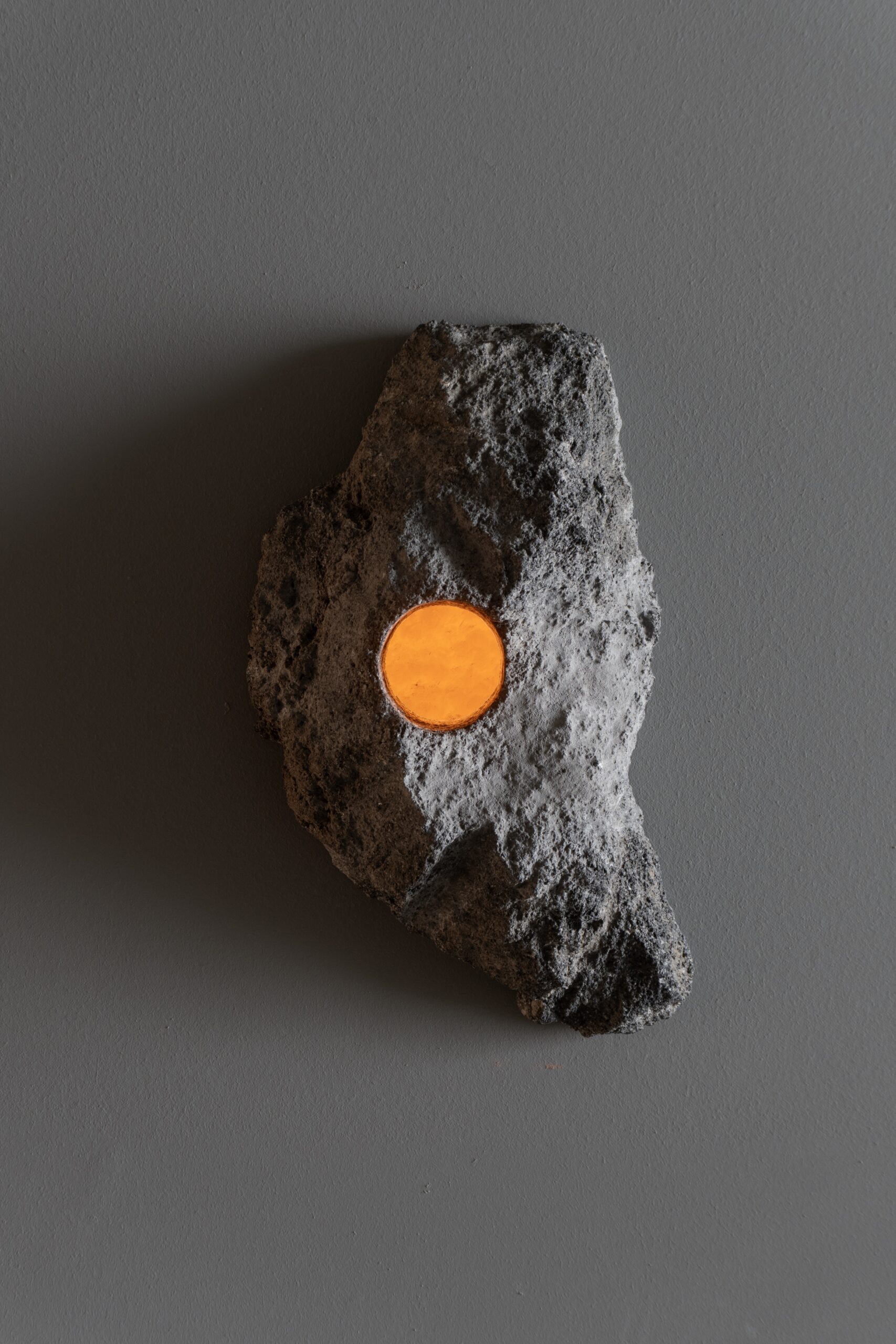
Cartografías I, 2026
Piedra volcánica, vidrio de color con textura. / Volcanic rock and colored textured glass.
30.5 x 19.5 x 7.5 cm. / 12 x 7 5⁄8 x 3 in.
Pieza única. / Unique piece.
Fotografía cortesía Galería Curro. / Photograph courtesy of Galería Curro.
En la penumbra de la cueva, la semilla deja de ser alimento para convertirse en registro. A través de una mirilla de roca volcánica se encuentra un pequeño cúmulo de granos de maíz, replicados y trasladados a la permanencia del bronce. Esta pieza establece un puente entre la cueva, las primeras manifestaciones rupestres y el inicio de la agricultura; es el vestigio de un ciclo que, aunque detenido, resuena en la memoria.
Al igual que los antiguos registros de mazorcas y calendarios agrícolas grabados en piedra, estas semillas funcionan como una cartografía de lo temporal. Representan la posibilidad de la vida, pero también su imposibilidad: al hacerse eternas mediante el metal, las semillas se vuelven infértiles, suspendidas en un pasado que es, simultáneamente, un futuro post- humano. Encapsuladas en un nicho detrás del muro que evoca las ofrendas halladas en las profundidades de la tierra, estas semillas son inalcanzables. La mirilla actúa como un filtro temporal; lo que vemos no es solo un material precioso, sino el eco poético de un grano que alguna vez fue el centro del cosmos y que hoy, protegido por la piedra, permanece como una suerte de cápsula del tiempo que custodia el secreto de nuestra propia evolución.
__
In the dim light of the cave, the seed ceases to be food and becomes a record. Through a peephole in the volcanic rock lies a small cluster of corn kernels, replicated and preserved in bronze. This piece bridges the cave, the earliest rock art, and the dawn of agriculture; it is the vestige of a cycle that, though halted, resonates in memory.
Like ancient records of corn cobs and agricultural calendars carved in stone, these seeds function as a cartography of the temporal. They represent the possibility of life, but also its impossibility: by becoming eternal through metal, the seeds turn infertile, suspended in a past that is, simultaneously, a post-human future. Encapsulated in a niche behind the wall that evokes the offerings found in the depths of the earth, these seeds are unreachable. The peephole acts as a temporal filter; what we see is not merely precious material, but the poetic echo of a grain that was once the center of the cosmos and that today, protected by stone, remains as a sort of time capsule guarding the secret of our own evolution.
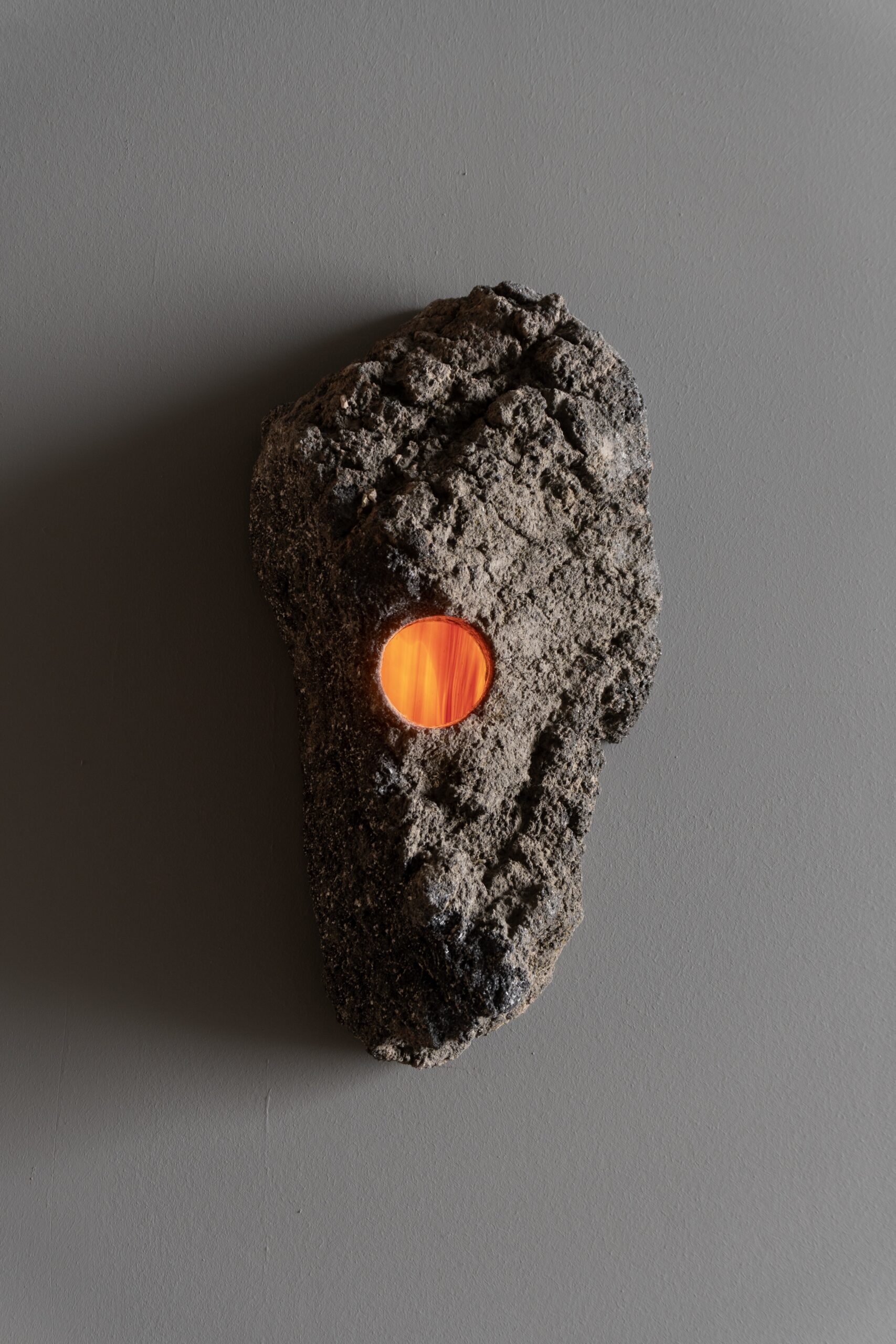
Cartografías II, 2026
Piedra volcánica, vidrio de color con textura. / Volcanic rock and colored textured glass.
40 x 20 x 10 cm. / 15 3⁄4 x 7 7⁄8 x 4 in.
Pieza única. / Unique piece.
Fotografía cortesía Galería Curro. / Photograph courtesy of Galería Curro.
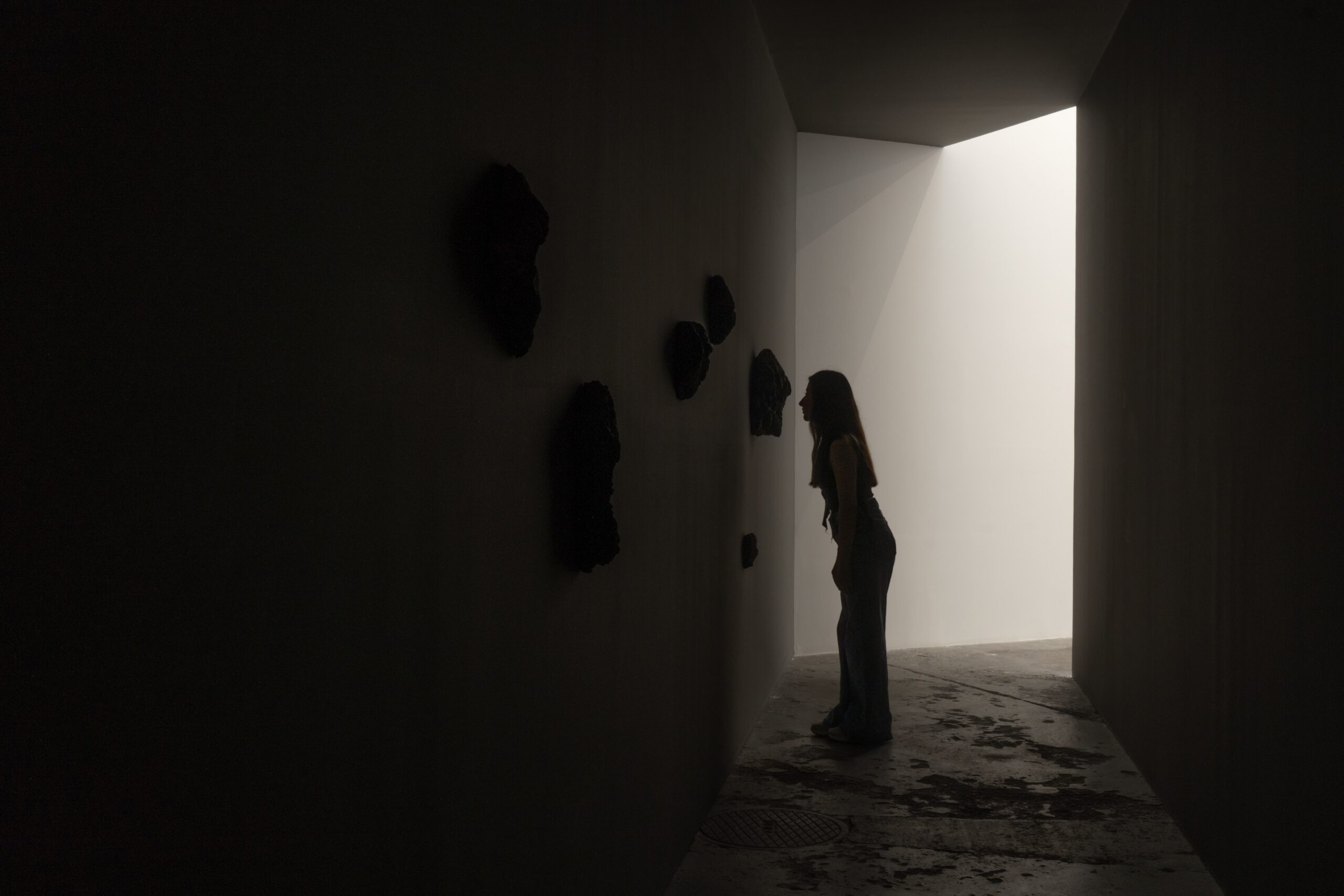
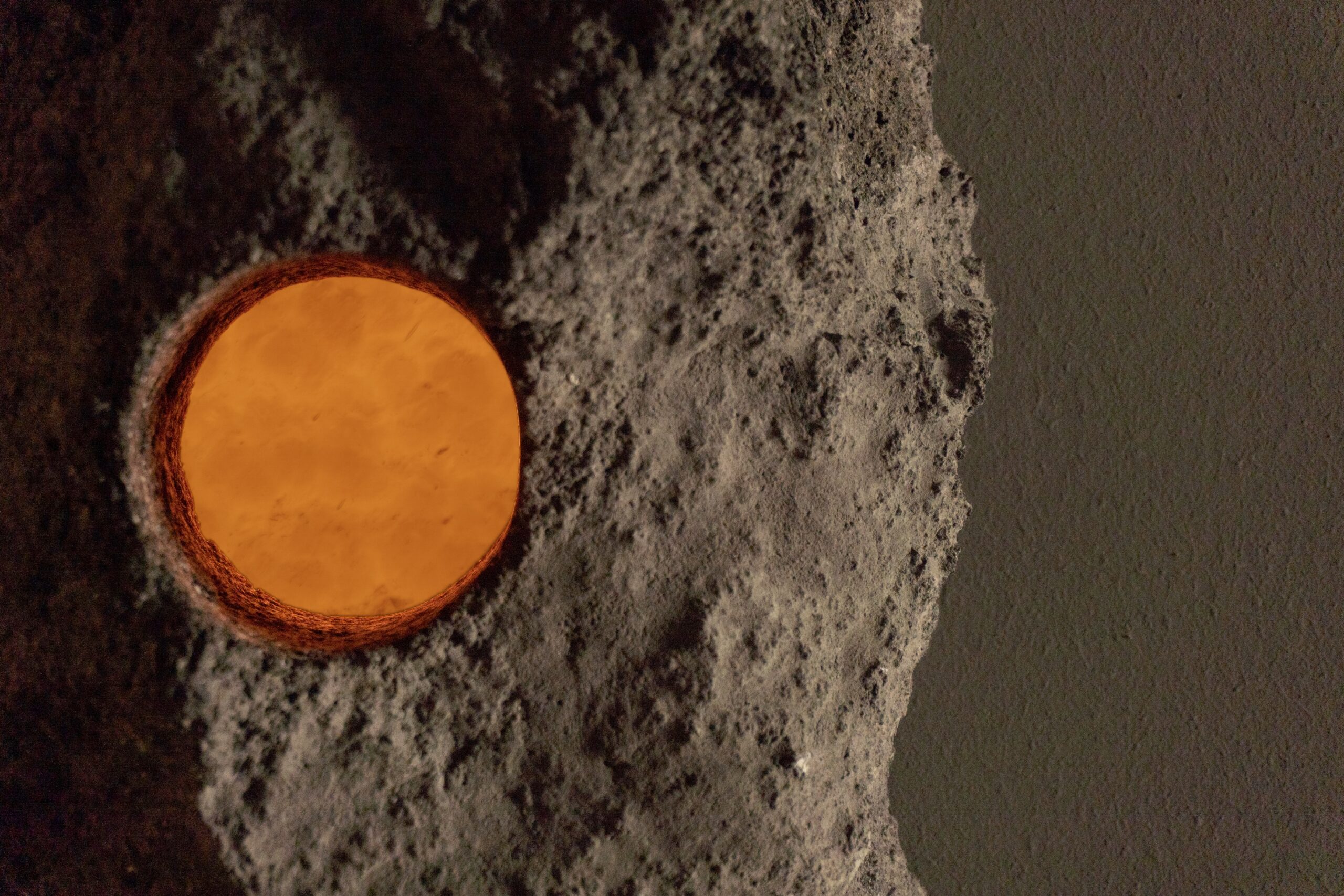
Cartografías I, 2026 (Detalle)
Piedra volcánica, vidrio de color con textura. / Volcanic rock and colored textured glass.
30.5 x 19.5 x 7.5 cm. / 12 x 7 5⁄8 x 3 in.
Pieza única. / Unique piece.
Fotografía cortesía Galería Curro. / Photograph courtesy of Galería Curro.
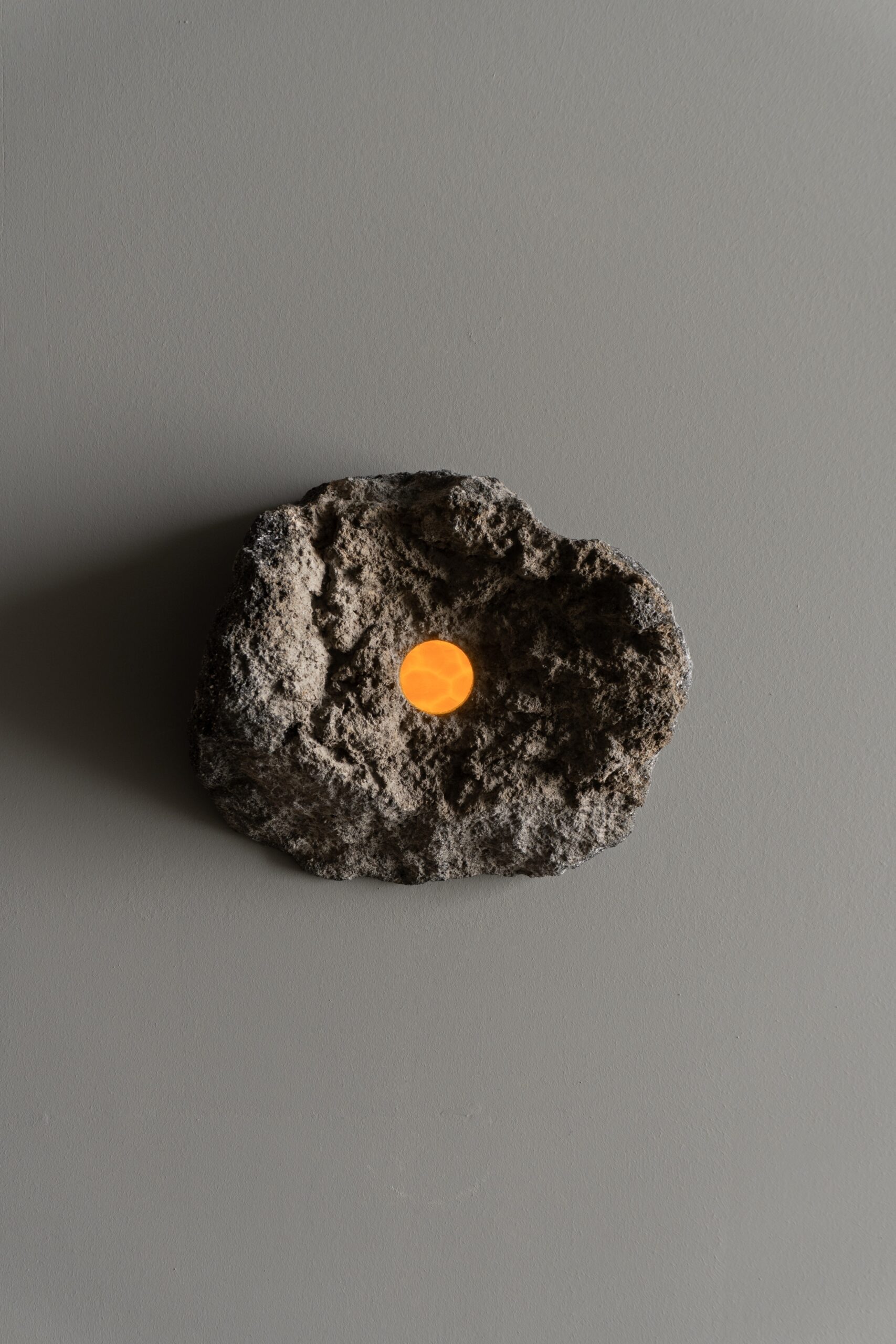
Cartografías III, 2026
Piedra volcánica, vidrio de color con textura. / Volcanic rock and colored textured glass.
23 x 26 x 8 cm. / 90 1⁄2 x 10 1⁄4 x 3 1⁄8 in.
Pieza única. / Unique piece.
Fotografía cortesía Galería Curro. / Photograph courtesy of Galería Curro.
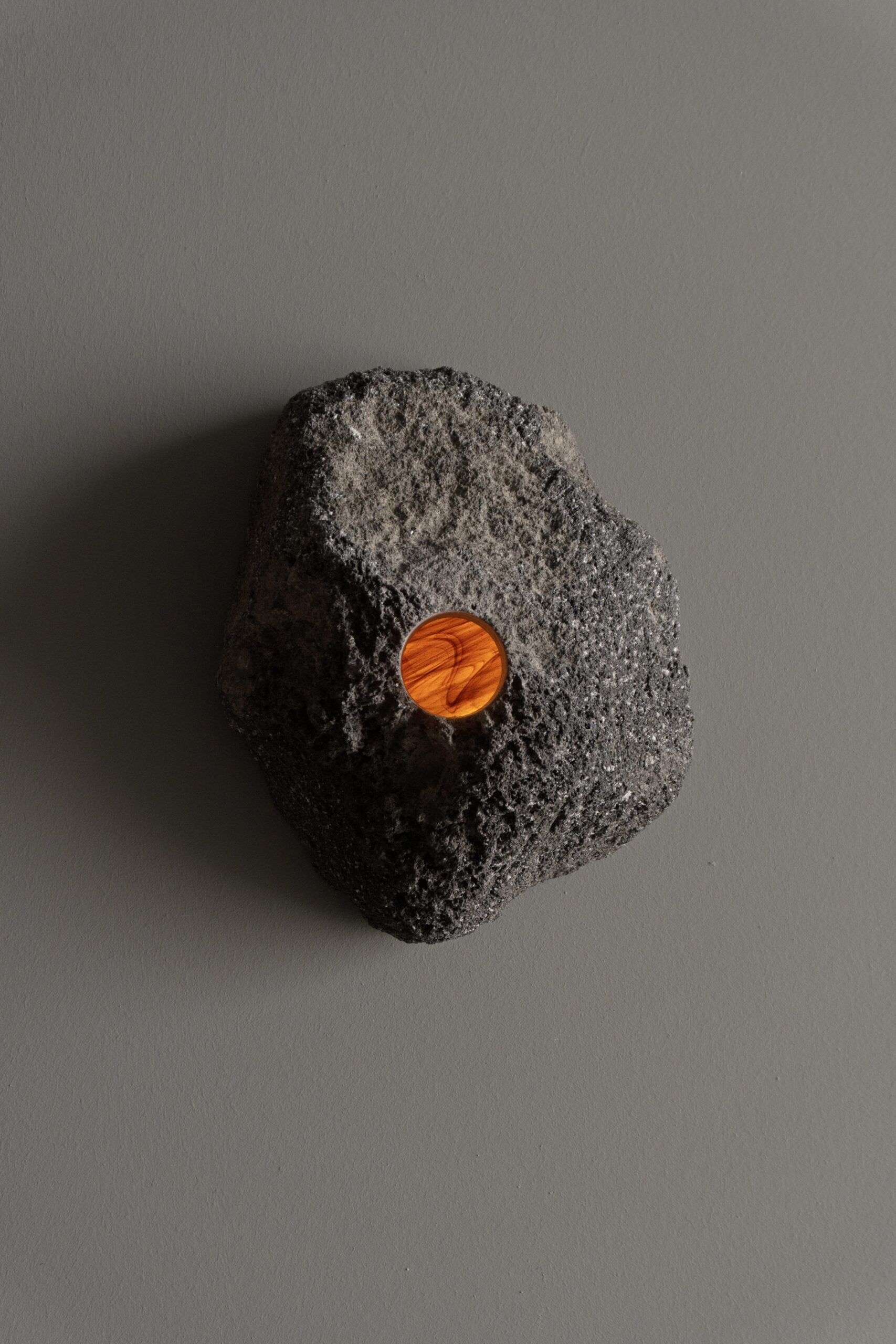
Cartografías IV, 2026
Piedra volcánica, vidrio de color con textura. / Volcanic rock and colored textured glass.
22 x 19 x 11 cm. / 8 5⁄8 x 7 1⁄2 x 4 3⁄8 in.
Pieza única. / Unique piece.
Fotografía cortesía Galería Curro. / Photograph courtesy of Galería Curro.
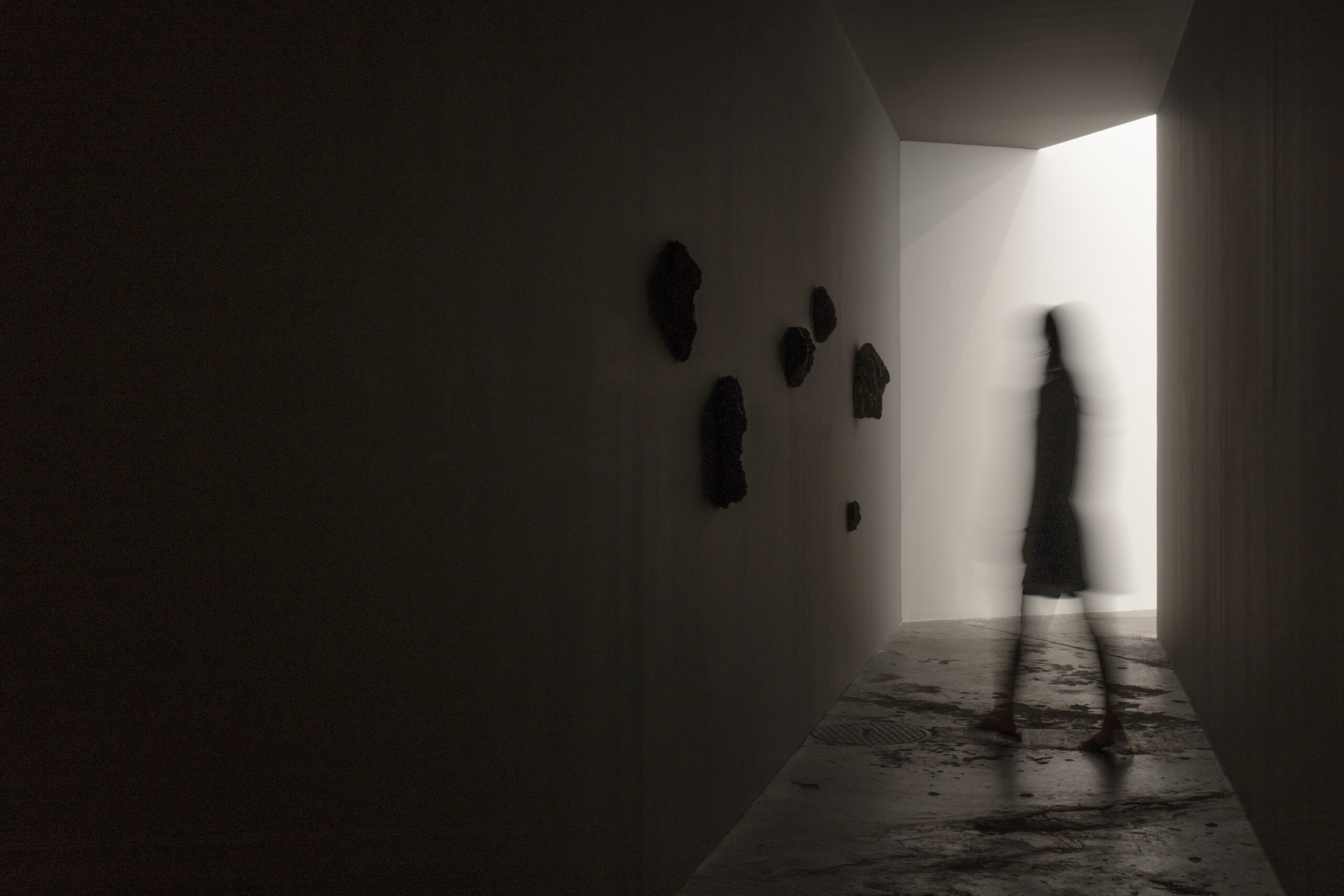
Vista de la exposición Donde terminan las montañas, 2026, Galería Curro. / Exhibition view of the exhibition Where the mountains end, 2026, Galería Curro.
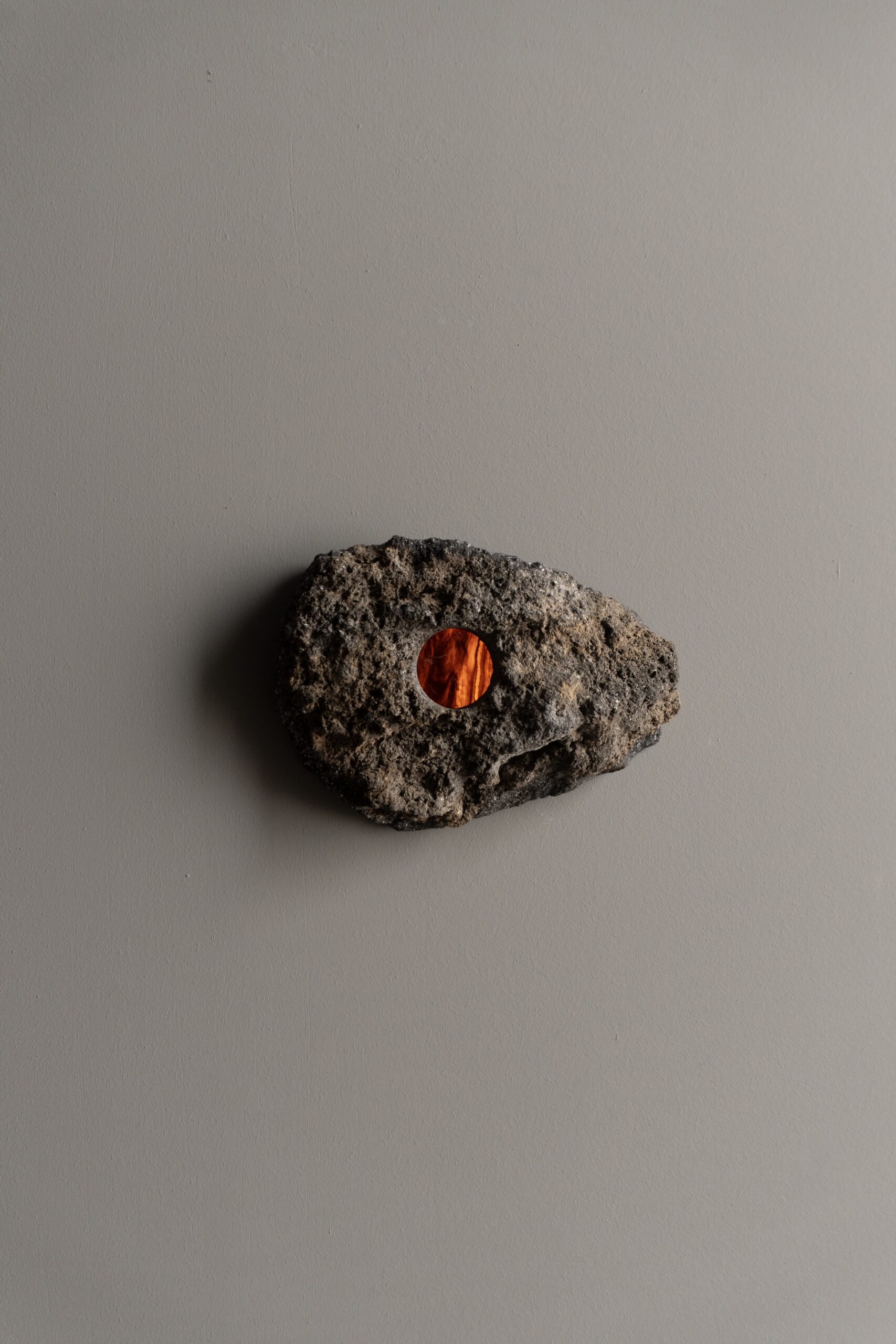
Cartografías V, 2026
Piedra volcánica, vidrio de color con textura. / Volcanic rock and colored textured glass.
14 x 20 x 4.5 cm. / 5 1⁄2 x 7 7⁄8 x 1 3⁄4 in.
Pieza única. / Unique piece.
Fotografía cortesía Galería Curro. / Photograph courtesy of Galería Curro.
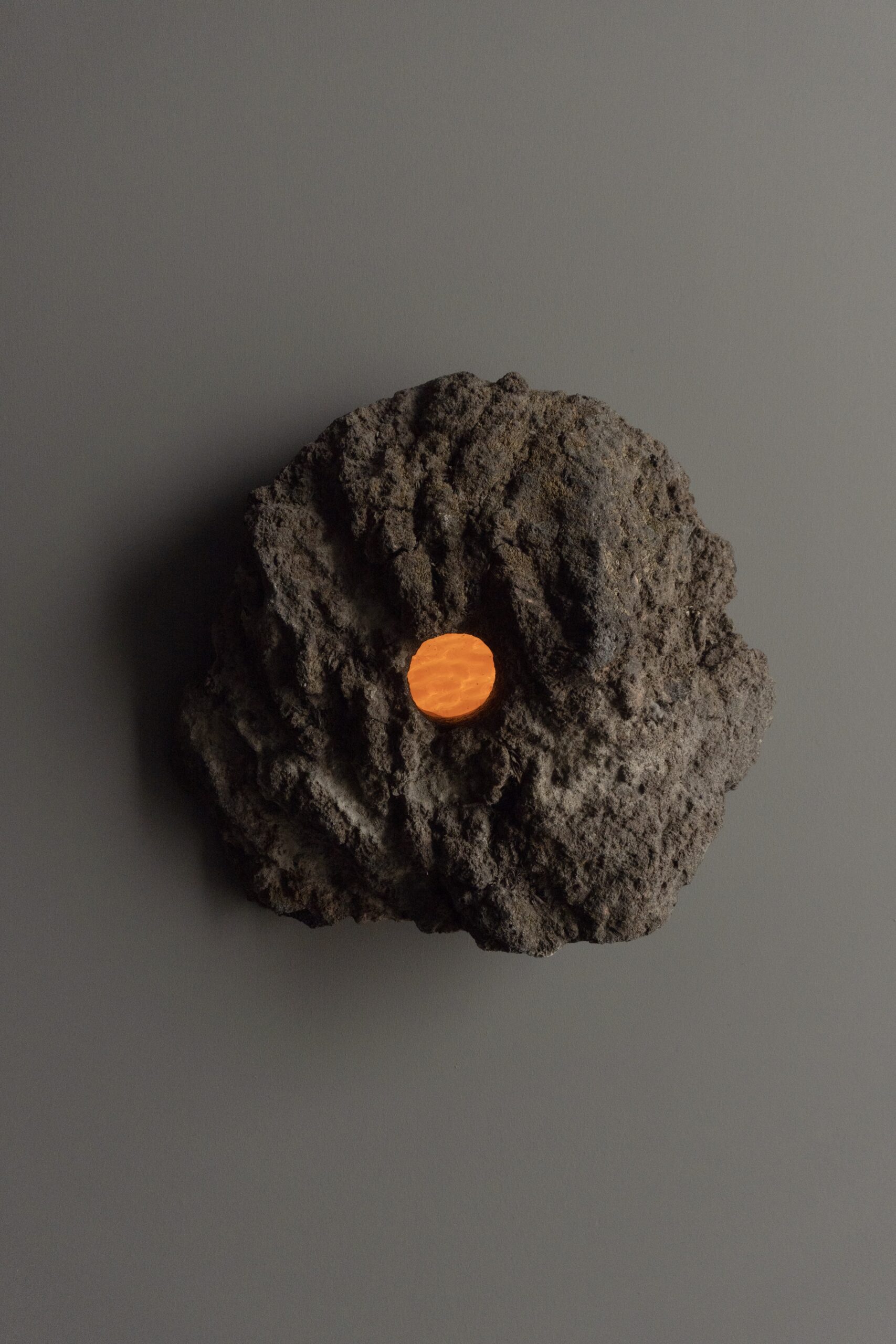
Cartografías VI, 2026
Piedra volcánica, vidrio de color con textura. / Volcanic rock and colored textured glass.
37 x 40 x 16 cm. / 14 5⁄8 x 15 3⁄4 x 6 1⁄4 in.
Pieza única. / Unique piece.
Fotografía cortesía Galería Curro. / Photograph courtesy of Galería Curro.
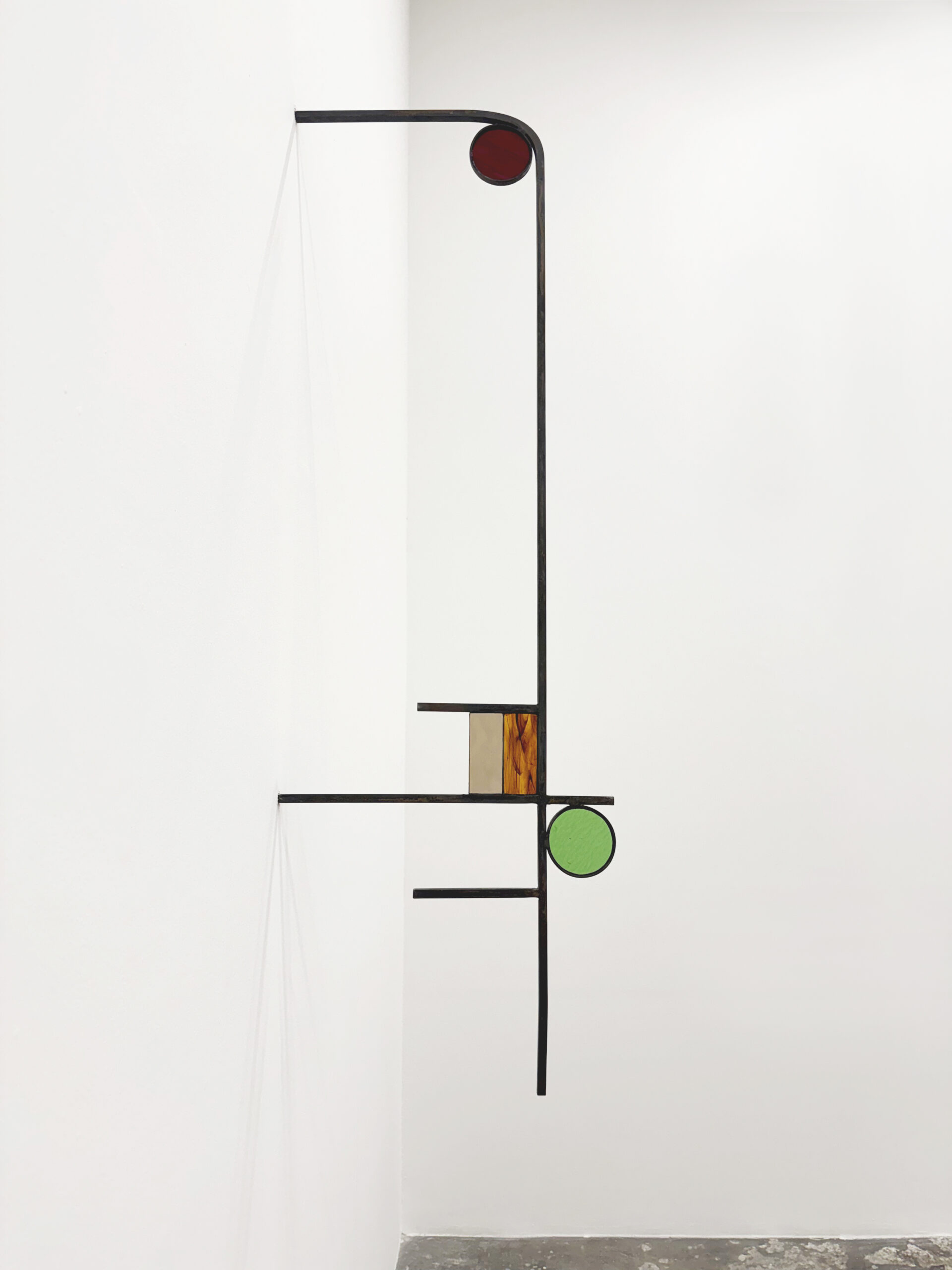
Apariciones IX, 2026
Hierro, vidrio y madera. / Iron, glass and wood.
150 x 40 x 1.27 cm. / 59 x 15 3/4 x 1/2 in.
Pieza única. / Unique piece.
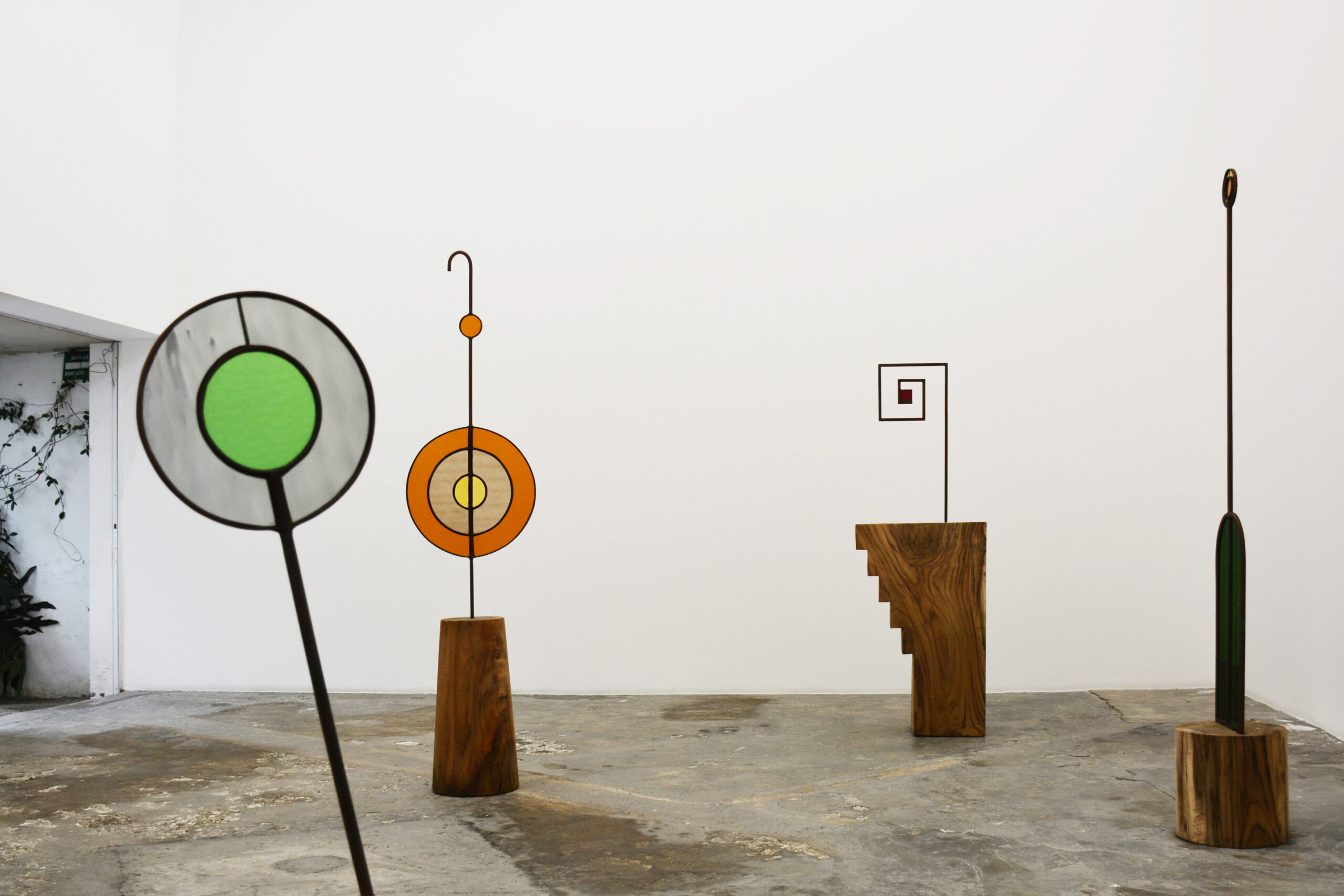
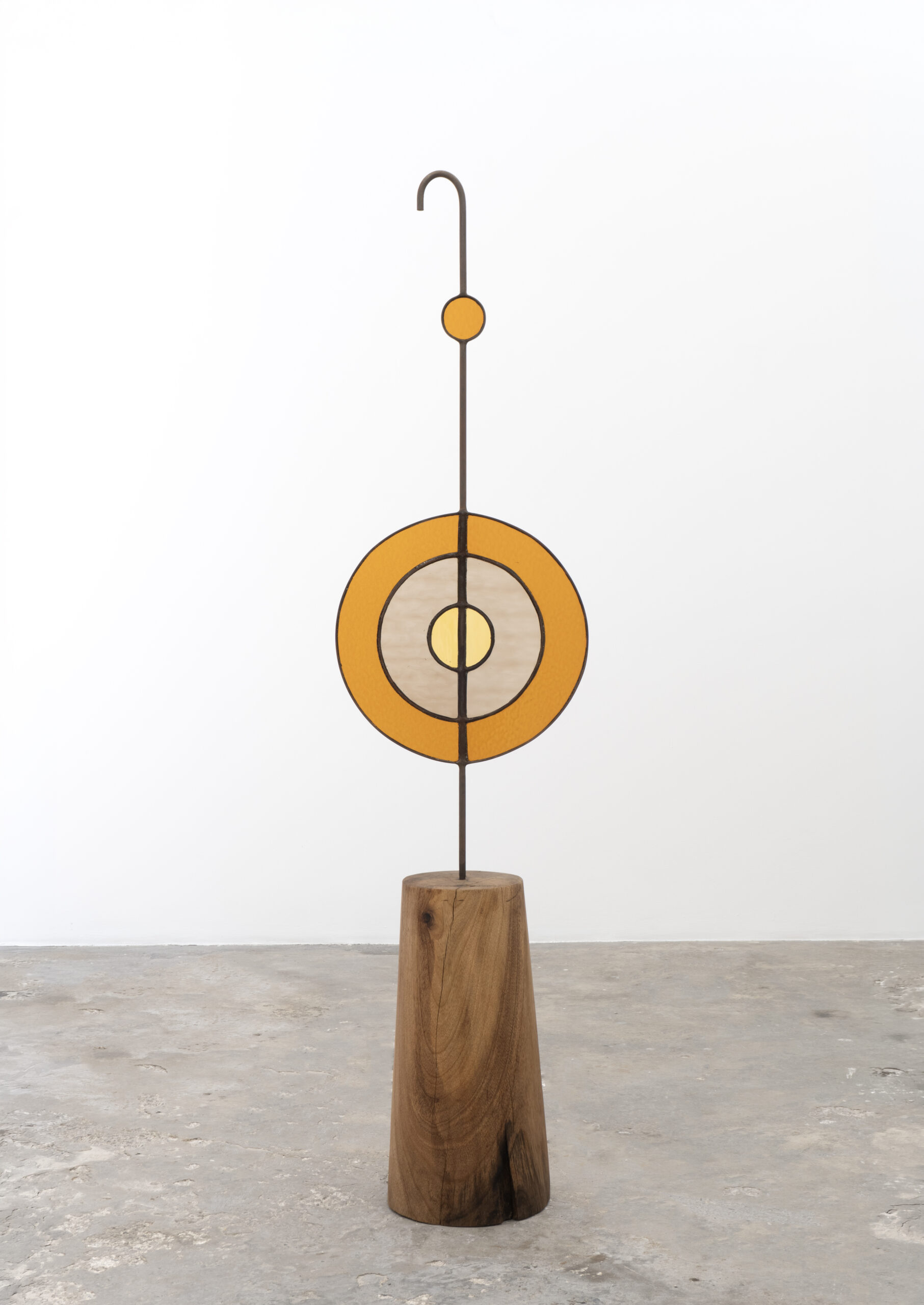
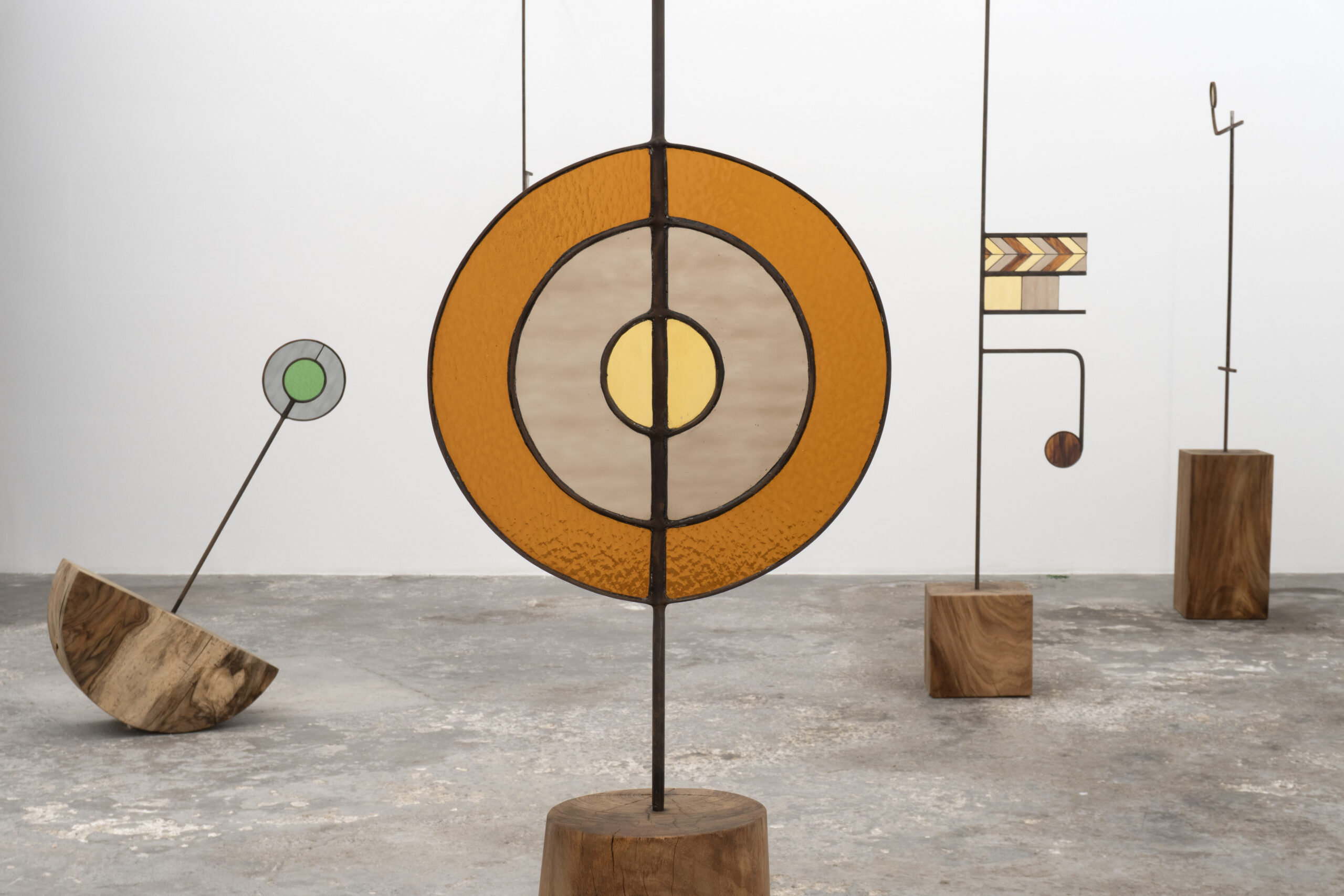
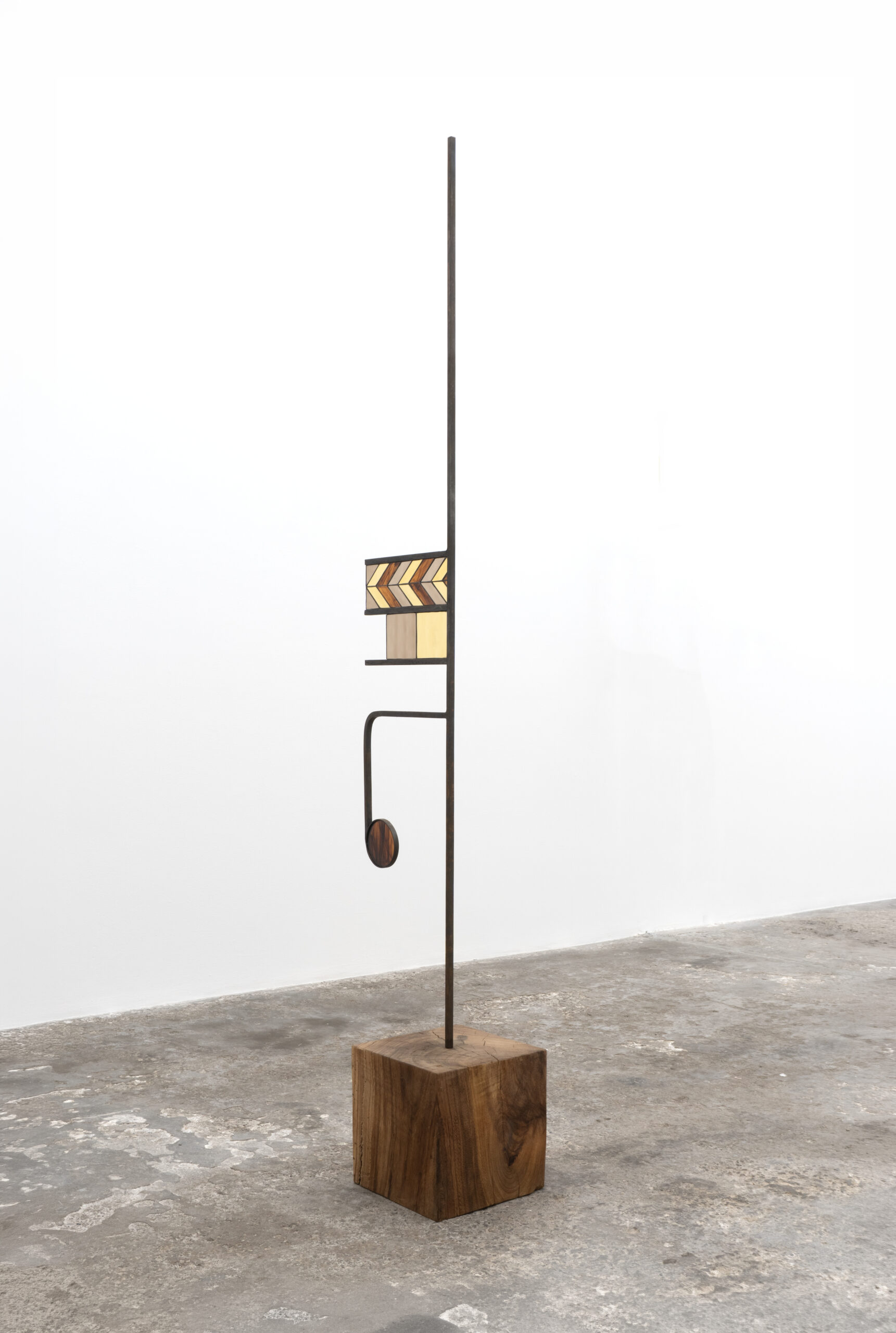
En el umbral donde la materia deja de ser peso para convertirse en signo, emergen las piezas que conforman Apariciones. Estas esculturas no han sido fabricadas; han sido convocadas. Surgen de un proceso de exhumación visual donde los glifos y grabados milenarios se desprenden de la piel de la roca para reclamar su tridimensionalidad. Las barras de fierro, delgadas como trazos de grafito en el aire, funcionan como nervaduras que sostienen fragmentos de vidrio texturizado. Estos vidrios, en tonos ámbar, oliva y café, no solo filtran la luz, sino que actúan como depósitos de tiempo: una transparencia que nos permite ver a través de la historia, conectando el arcaico mensaje de la piedra con el espacio aséptico de la sala. / On the threshold where matter ceases to be weight and becomes a sign, the pieces that make up Apariciones emerge. These sculptures have not been crafted; they have been summoned. They arise from a process of visual exhumation in which ancient glyphs and engravings peel away from the rock’s surface to reclaim their three-dimensionality. The iron bars, slender as strokes of graphite in the air, function as ribs that support fragments of textured glass. These glass pieces, in shades of amber, olive, and brown, not only filter the light but also act as repositories of time: a transparency that allows us to see through history, connecting the archaic message of the stone with the sterile space of the gallery.
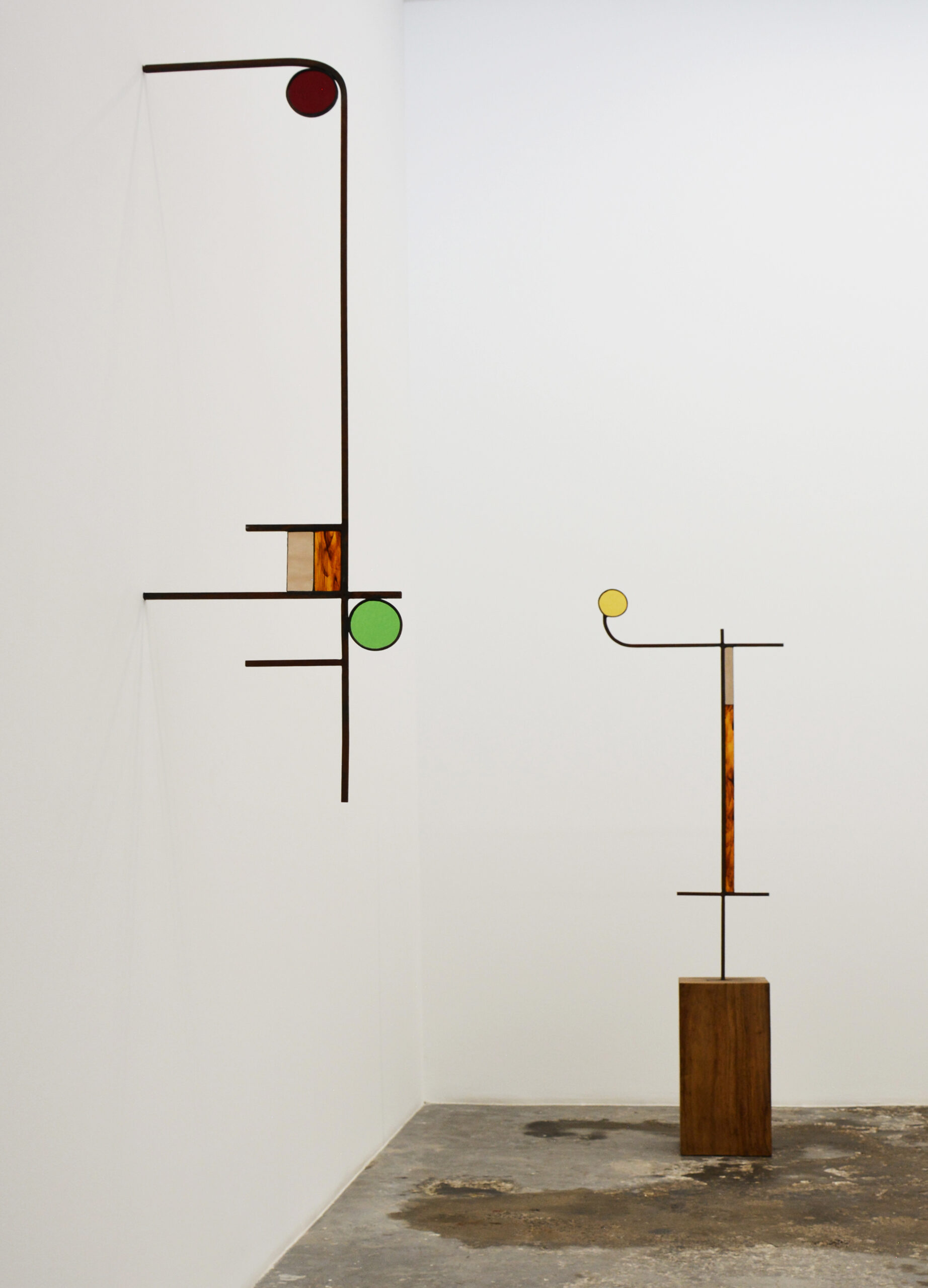
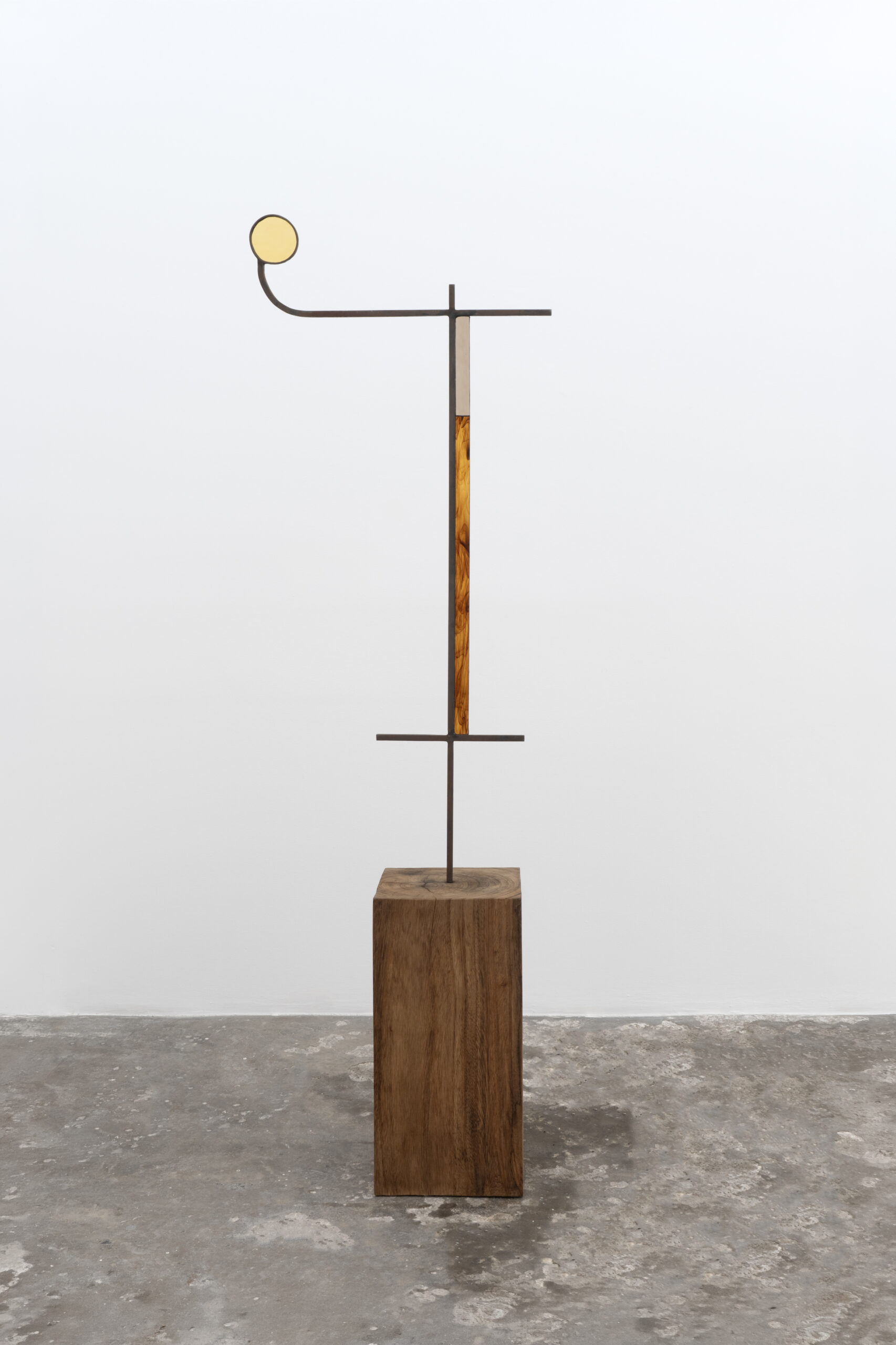
Apariciones VI, 2026
Hierro, vidrio y madera. / Iron, glass and wood.
200 x 64 x 30 cm. / 78 3⁄4 x 25 1⁄4 x 11 3⁄4 in.
Pieza única. / Unique piece.
Fotografía cortesía Galería Curro. / Photograph courtesy of Galería Curro.
Apariciones II, 2026
Hierro, vidrio y madera. / Iron, glass and wood.
190 x 46 x 30 cm. / 74 3⁄4 x 18 1⁄8 x 11 3⁄4 in.
Pieza única. / Unique piece.
Fotografía cortesía Galería Curro. / Photograph courtesy of Galería Curro.
Apariciones III, 2026
Hierro, vidrio y madera. / Iron, glass and wood.
220 x 45 x 30 cm. / 86 5/8 x 17 3/4 x 11 3/4 in.
Pieza única. / Unique piece.
Fotografía cortesía Galería Curro. / Photograph courtesy of Galería Curro.
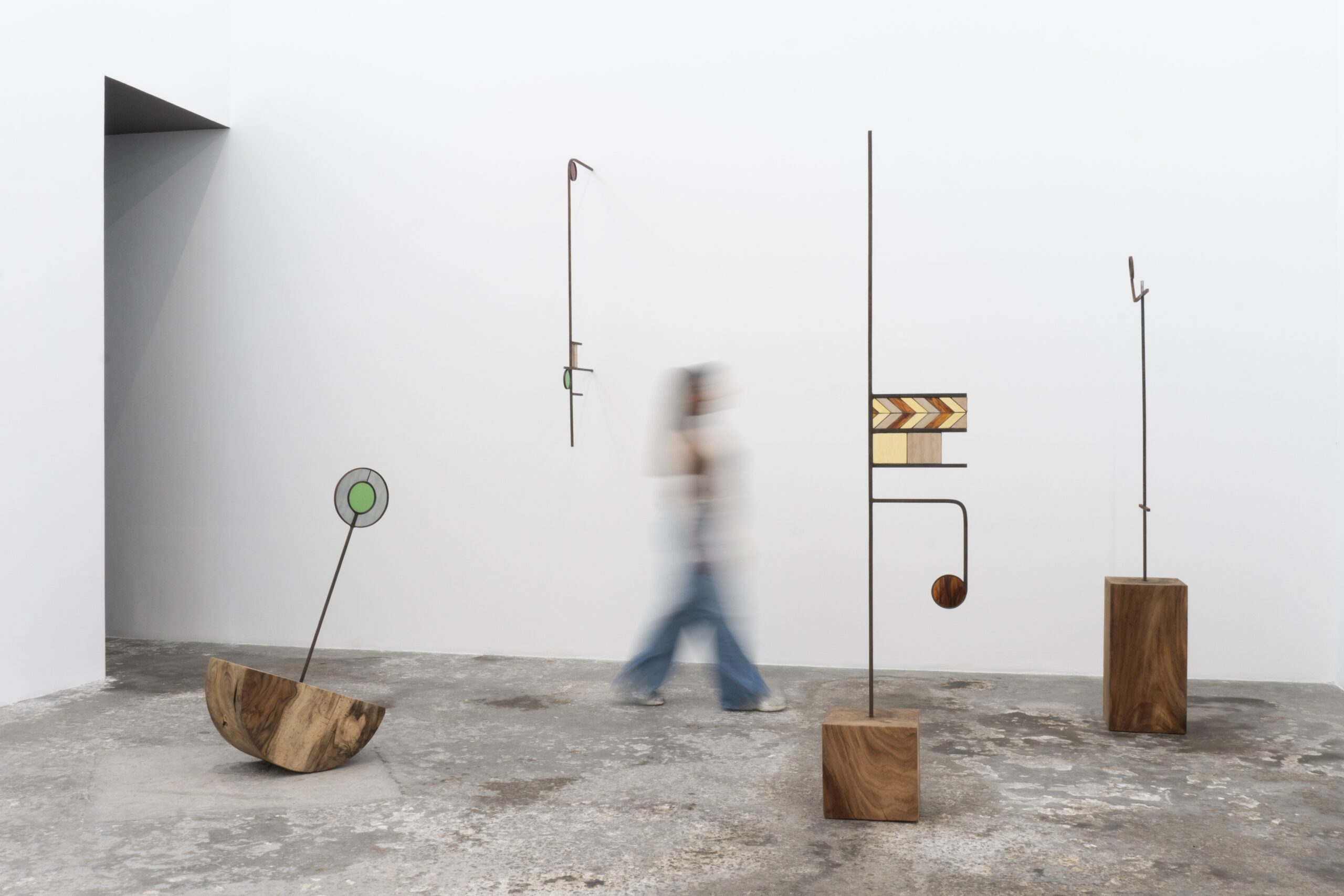
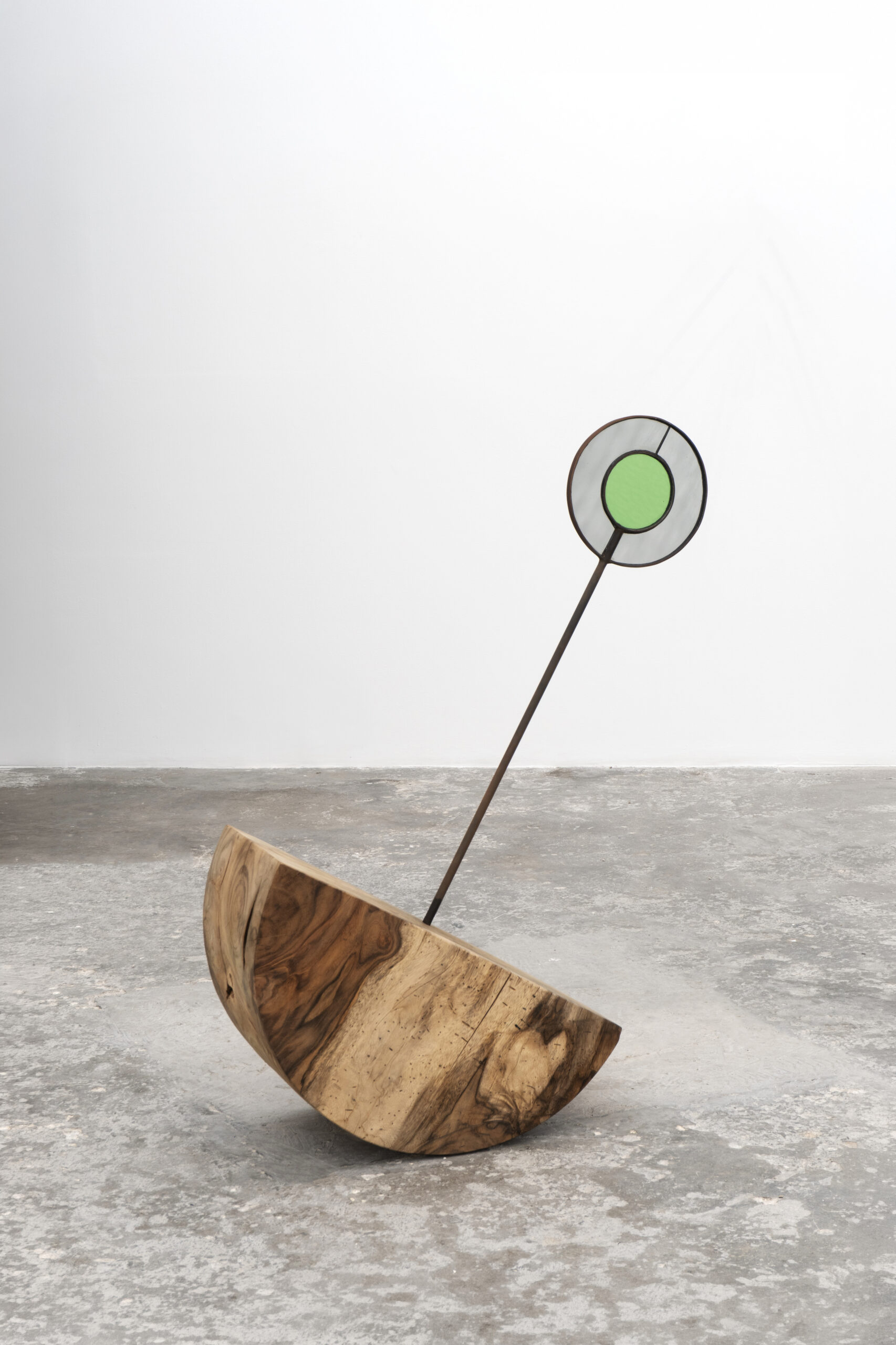
Apariciones IV, 2026
Hierro, vidrio y madera. / Iron, glass and wood.
115 x 60 x 30 cm. / 45 1⁄4 x 23 5⁄8 x 11 3⁄4 in.
Pieza única. / Unique piece.
Fotografía cortesía Galería Curro. / Photograph courtesy of Galería Curro.
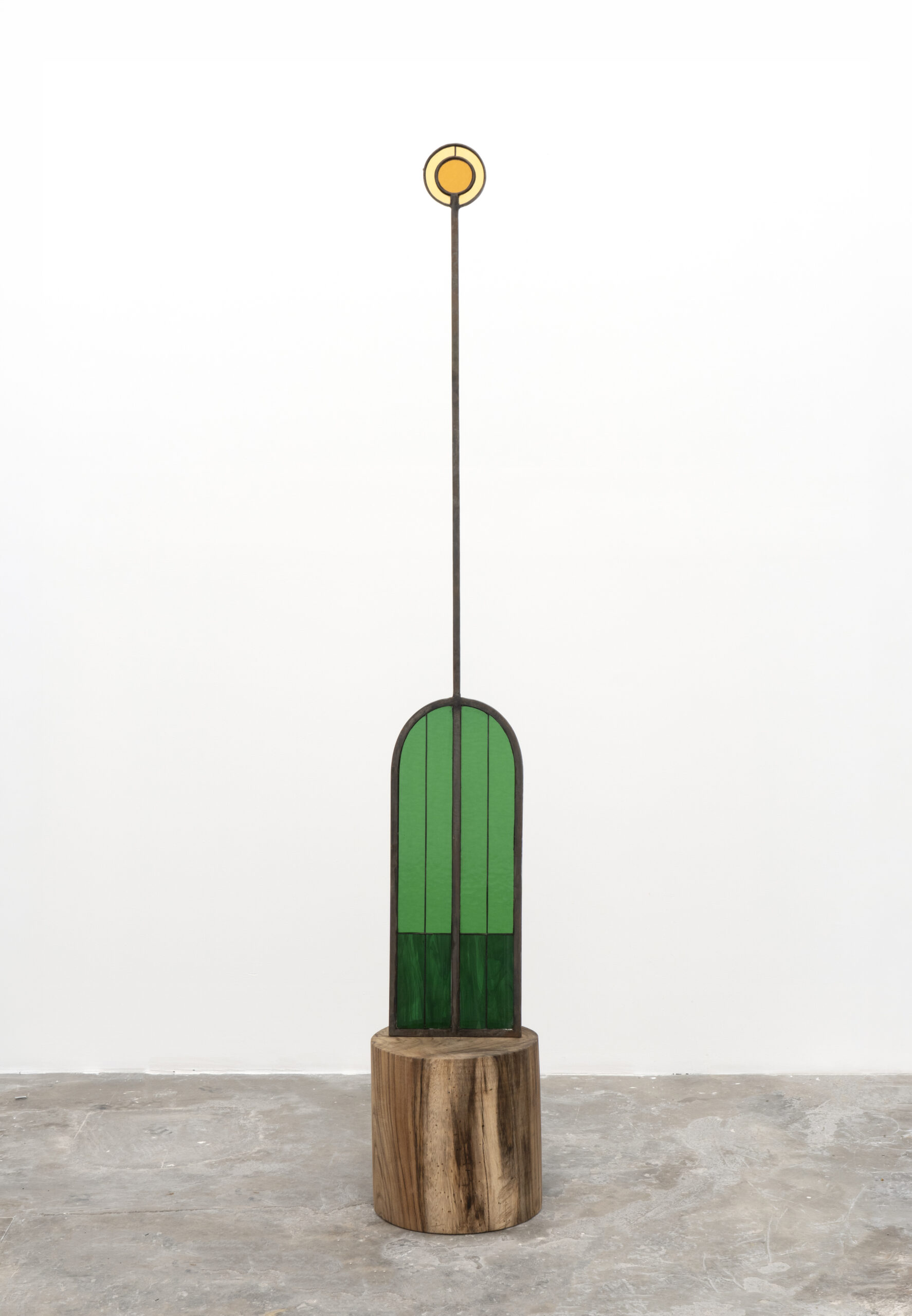
Apariciones VIII, 2026
Hierro, vidrio y madera. / Iron, glass and wood.
187.5 x 29.5 x 30 cm. / 73 7⁄8 x 11 5⁄8 x 11 3⁄4 in.
Pieza única. / Unique piece.
Fotografía cortesía Galería Curro. / Photograph courtesy of Galería Curro.
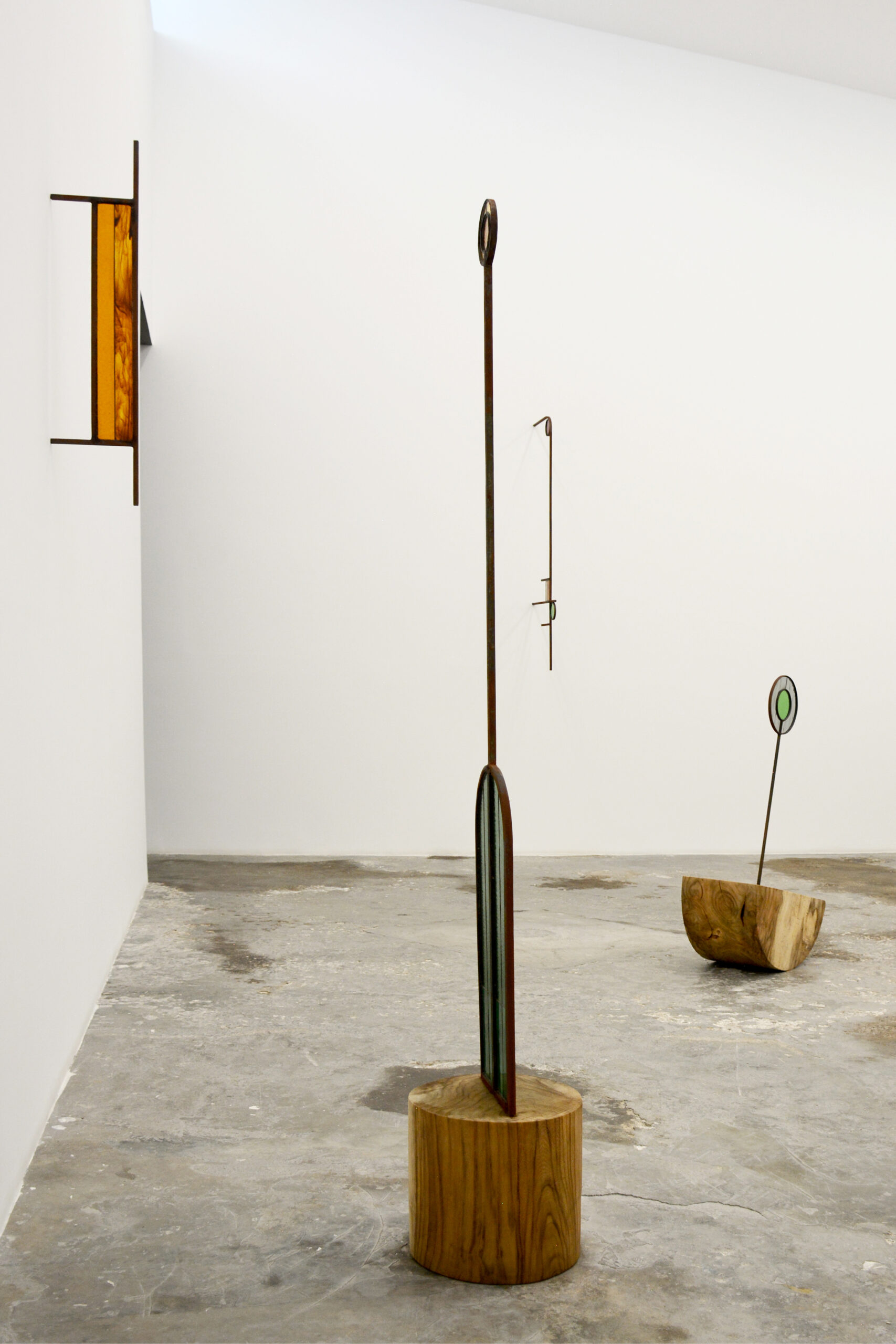
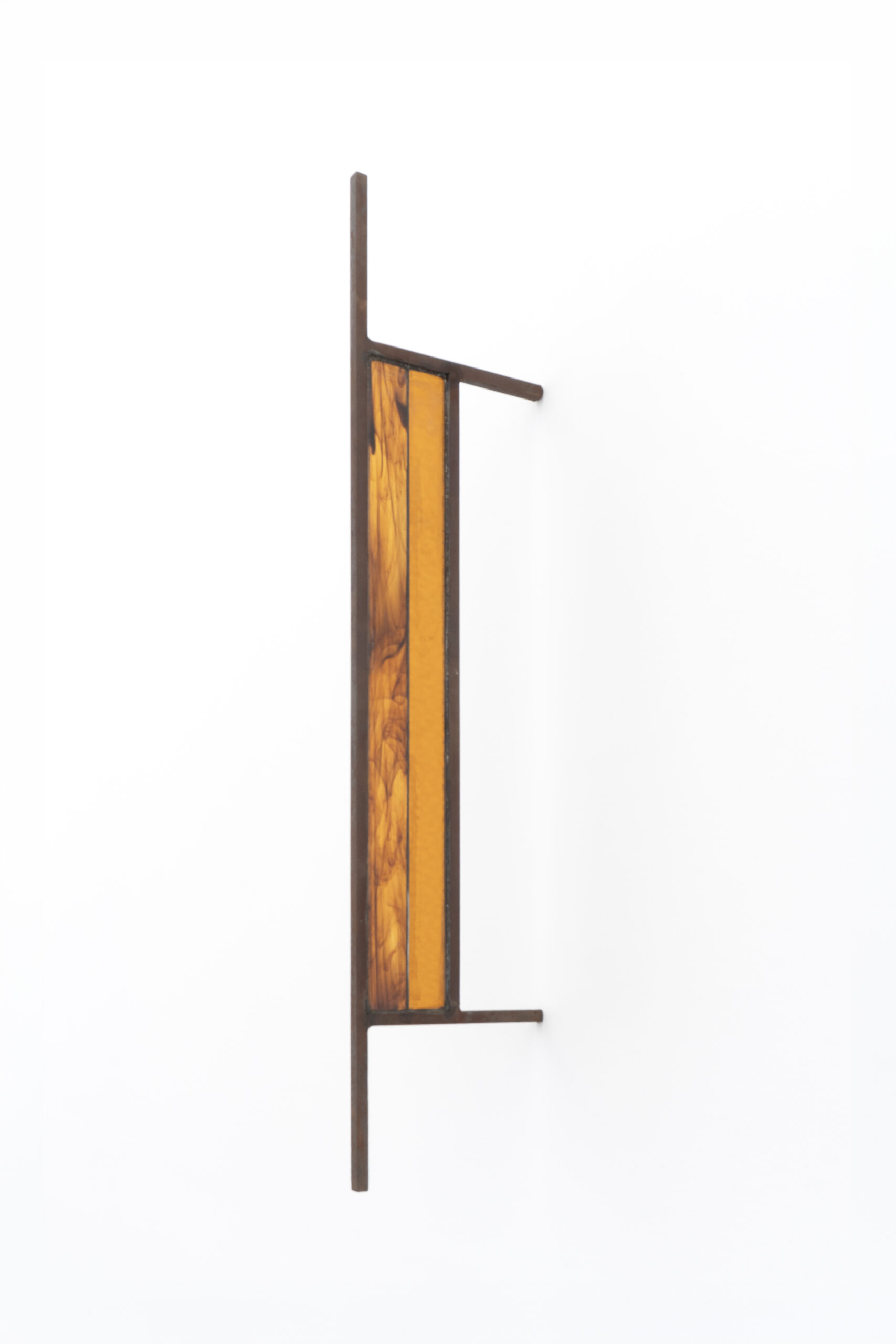
Apariciones X, 2026
Hierro, vidrio y madera. / Iron, glass and wood.
93 x 21 x 1.27 cm. / 36 5⁄8 x 8 1⁄4 x 1⁄2 in.
Pieza única. / Unique piece.
Fotografía cortesía Galería Curro. / Photograph courtesy of Galería Curro.
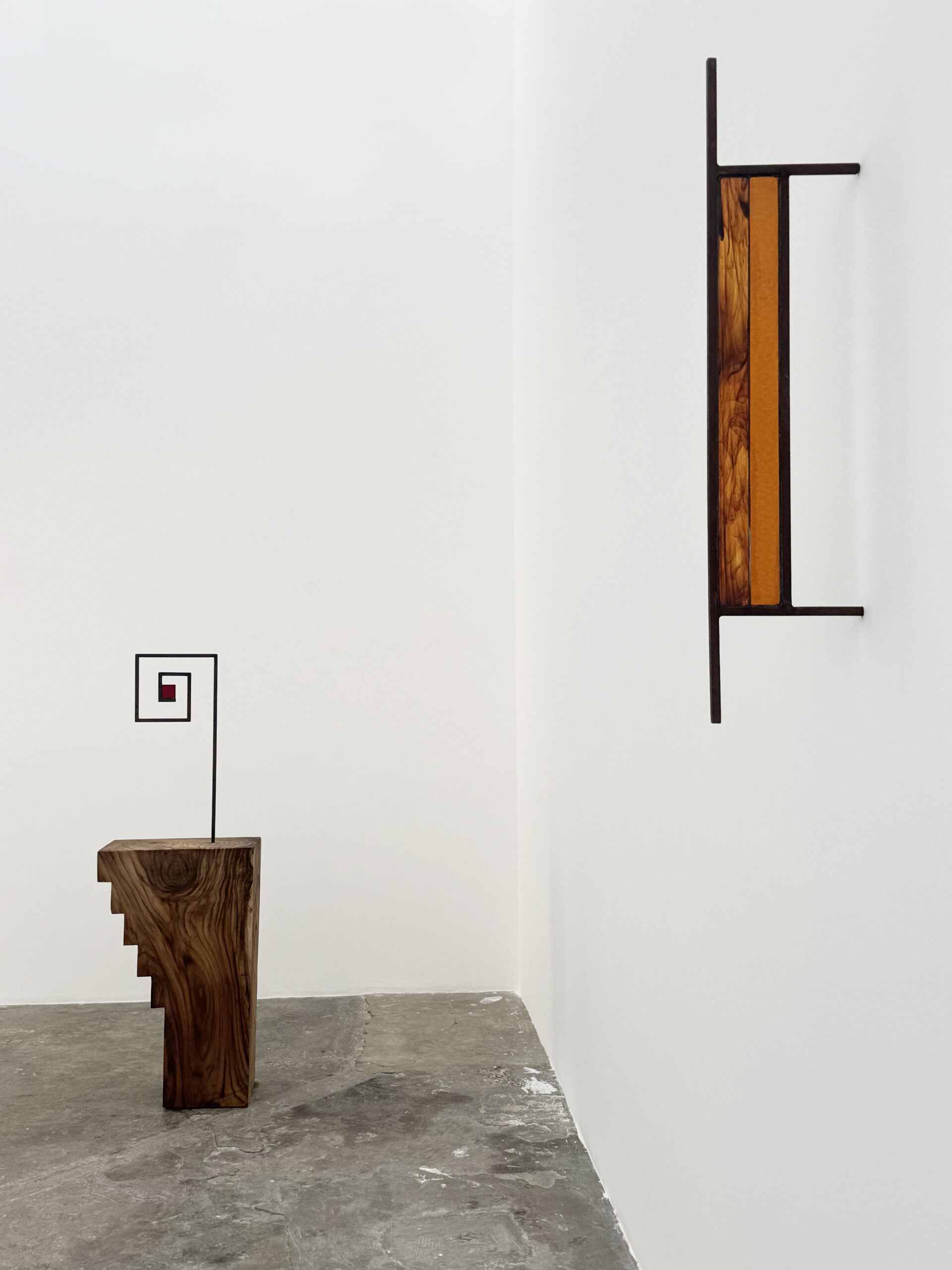
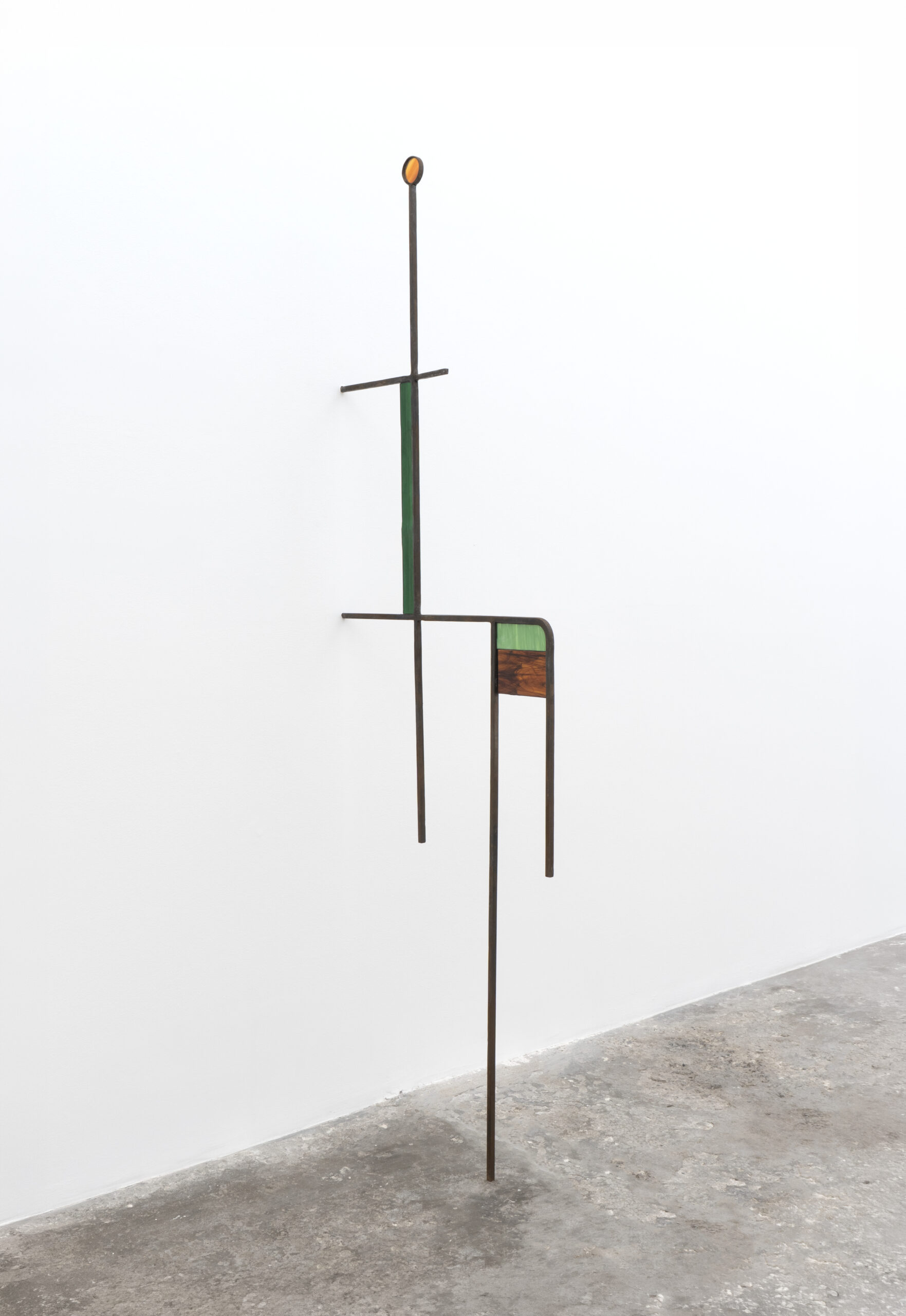
Apariciones XI, 2026
Hierro, vidrio y madera. / Iron, glass and wood.
220 x 66 x 1.27 cm / 86 5⁄8 x 26 x 1⁄2 in.
Pieza única. / Unique piece.
Fotografía cortesía Galería Curro. / Photograph courtesy of Galería Curro.
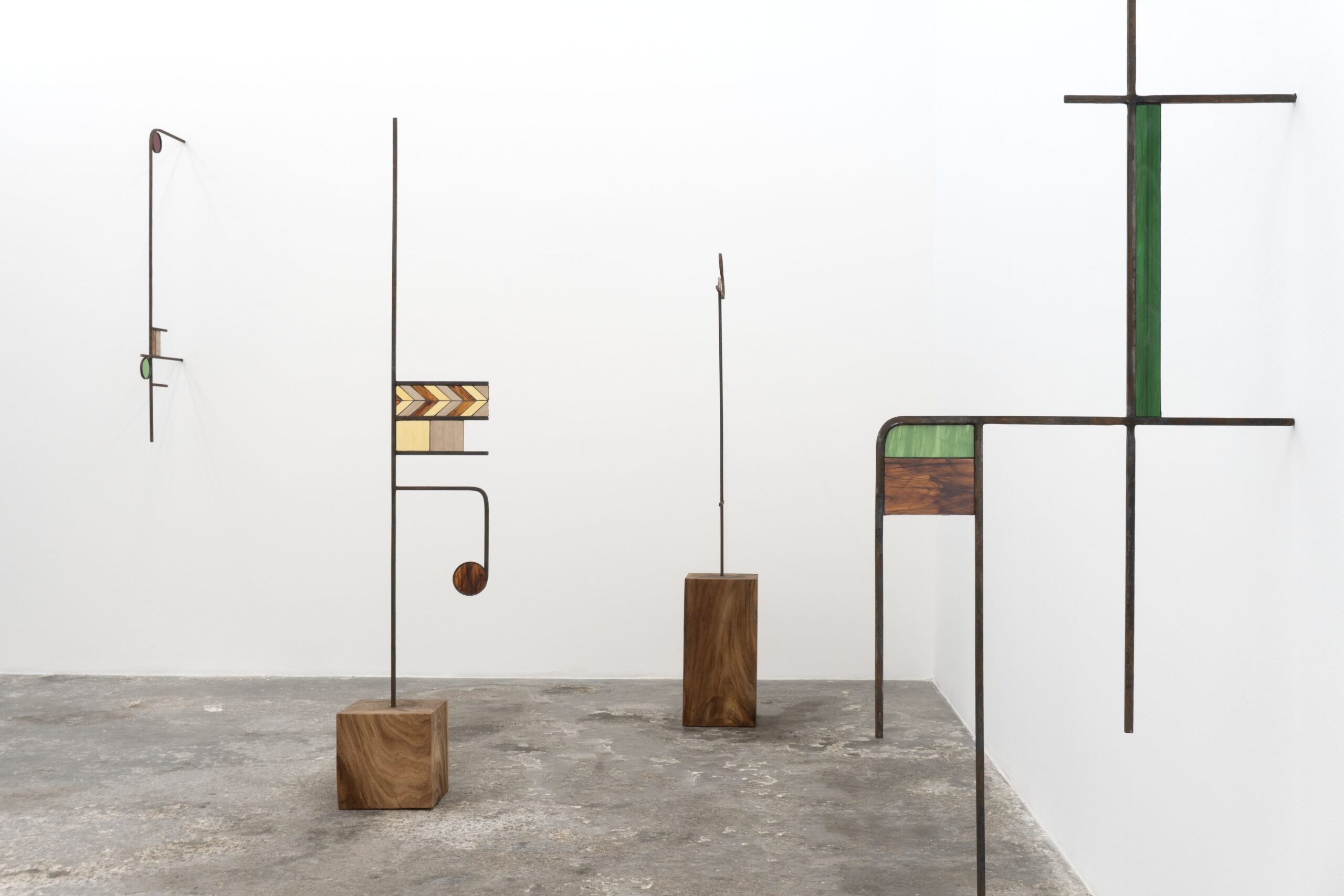
Vista de la exposición Donde terminan las montañas, 2026, Galería Curro. / Exhibition view of the exhibition Where the mountains end, 2026, Galería Curro.
Fotografía cortesía Galería Curro. / Photograph courtesy of Galería Curro.
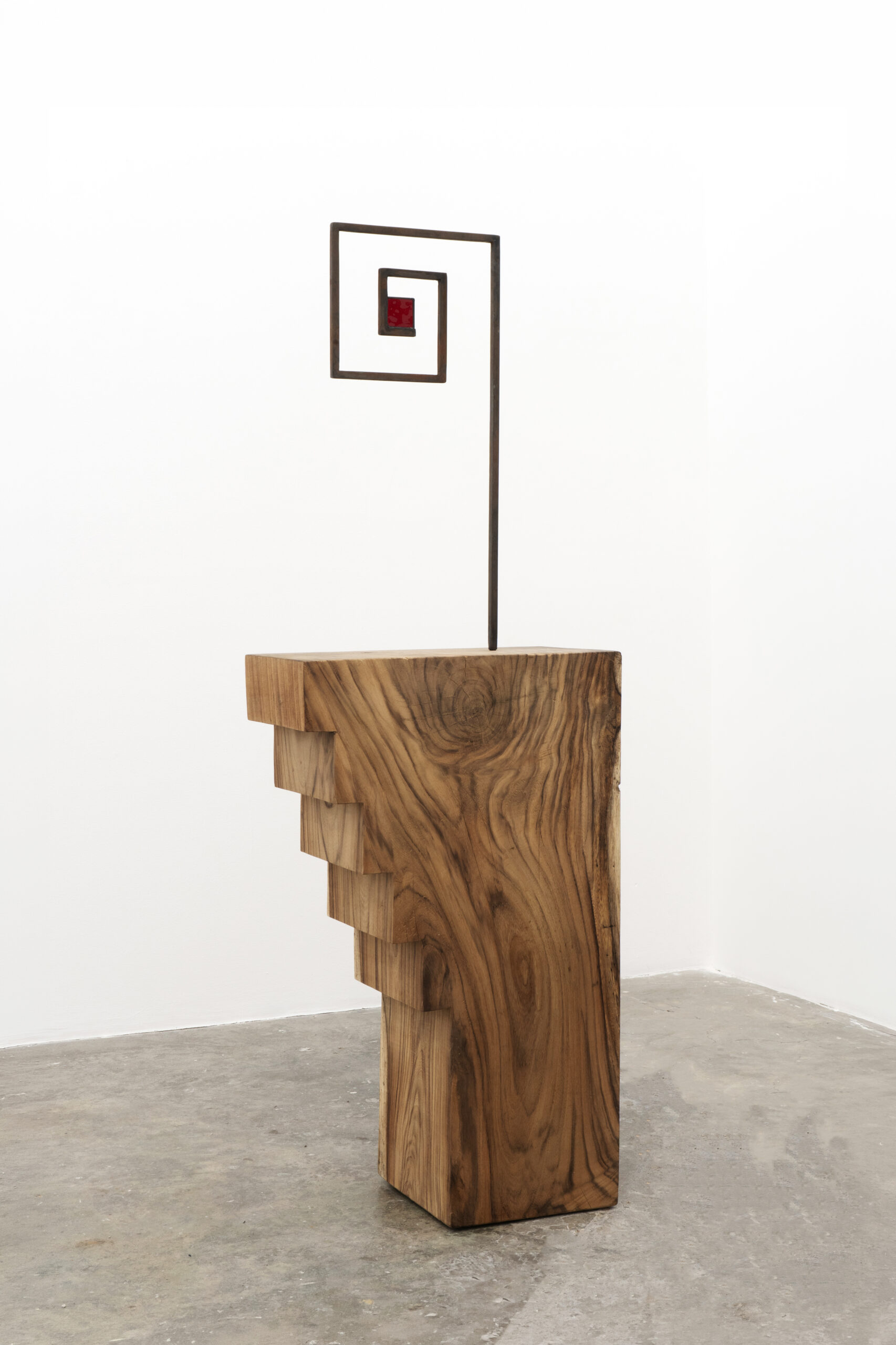
Apariciones XI, 2026
Hierro, vidrio y madera. / Iron, glass and wood.
160 x 55 x 30 cm. / 63 x 21 5⁄8 x 11 3⁄4 in.
Pieza única. / Unique piece.
Fotografía cortesía Galería Curro. / Photograph courtesy of Galería Curro.
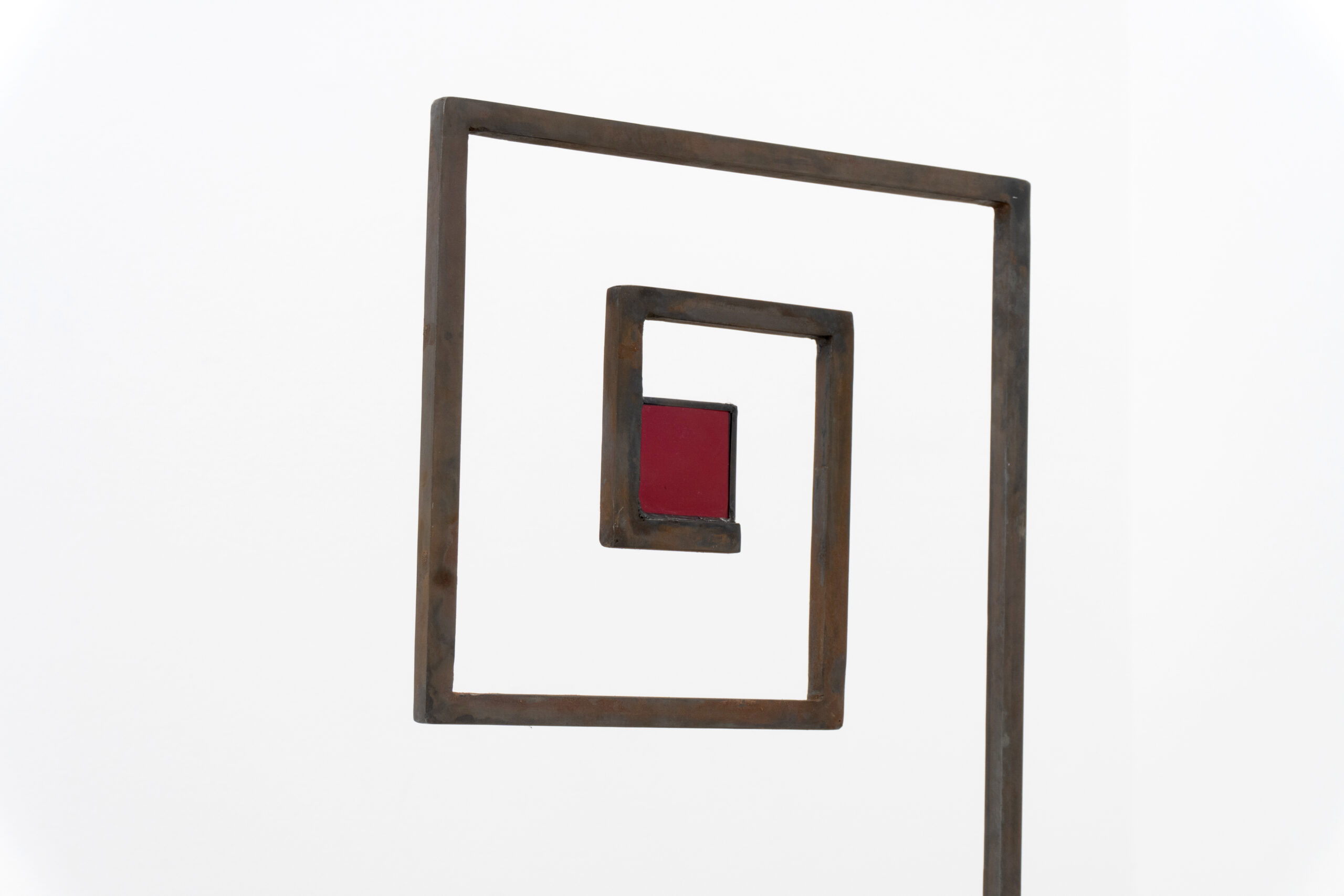
Apariciones I, 2026
Hierro, vidrio y madera. / Iron, glass and wood.
160 x 55 x 30 cm. / 63 x 21 5⁄8 x 11 3⁄4 in.
Pieza única. / Unique piece.
Fotografía cortesía Galería Curro. / Photograph courtesy of Galería Curro.
Sentir el peso de una roca en la mano otorga la certeza de que el mundo existe; la realidad se vuelve tangible. Sin embargo, más allá de lo que podemos palpar, la piedra carga tiempo, guarda misterios e irradia energía. En tan solo ese trozo de materia parece albergarse el universo entero, abriendo una dimensión abstracta donde la piedra actúa como vínculo entre lo material y lo inmaterial, entre el pasado y el futuro.
En ese umbral, donde el contorno rocoso se encuentra con el cielo, surge la exposición Donde terminan las montañas, en la que Cynthia Gutiérrez propone otras formas de relacionarnos con el tiempo y el espacio. Voltear hacia el pasado en busca del origen, al momento del génesis de las rocas, cuando el caos se vuelve materia. Entender al mundo sin nosotros como centro, todas las cosas existiendo en el mismo nivel. Buscar lo primordial en un tiempo en el que la humanidad recién empezaba a existir, cuando se veían las cosas por primera vez y las posibilidades eran infinitas, en el silencio de una cueva abrazado por la oscuridad; un tiempo en el que realizamos nuestras primeras huellas y marcas en la piedra.
A través de distintas obras, Gutiérrez explora aquello que escapa a lo tangible. Aquello que exige agudizar la percepción para sondear las posibilidades del vacío y el abismo, para después mostrarnos un mundo de trazos y símbolos que se despliegan ahora en el espacio como esculturas abstractas. Conocimientos de otro tiempo se desdoblan ante nuestros ojos para que intentemos descifrarlos, entrever pistas, quizá no de manera lógica, sino desde la intuición, desde un conocimiento arraigado en lo más profundo. Existe una potencia de resistencia en la conciencia colectiva: una fuerza capaz de imaginar otros escenarios, abrazar nuevos conocimientos y apelar al cambio constante. Desdibujar el futuro y redibujar el pasado para vislumbrar nuevos horizontes.
—
Feeling the weight of a rock in your hand gives you the certainty that the world exists; reality becomes tangible. Yet beyond what we can touch, the stone carries time, holds mysteries, and radiates energy. In that single piece of matter, the entire universe seems to be contained, opening up an abstract dimension where the stone acts as a link between the material and the immaterial, between the past and the future.
At that threshold, where the rocky outline meets the sky, the exhibition Donde terminan las montañas, emerges, in which Cynthia Gutiérrez proposes other ways of relating to time and space. Looking back to the past in search of the origin, to the moment of the rocks’ genesis, when chaos becomes matter. Understanding the world without us at its center, all things existing on the same level. Seeking the primordial in a time when humanity was just beginning to exist, when things were seen for the first time and possibilities were infinite, in the silence of a cave embraced by darkness; a time when we made our first footprints and marks on the stone.
Through various works, Gutiérrez explores that which eludes the tangible. That which demands we sharpen our perception to probe the possibilities of emptiness and the abyss and then reveals to us a world of lines and symbols that now unfold in space like abstract sculptures. Knowledge from another time unfolds before our eyes, inviting us to decipher it, to glimpse clues—perhaps not through logic, but through intuition, through a knowledge rooted in the deepest depths. There is a power of resistance in the collective consciousness: a force capable of imagining other scenarios, embracing new knowledge, and calling for constant change. Blurring the future and redrawing the past to glimpse new horizons.